

Cross-Age Hybrid Living / Co-Living Rental Space
Year: 2019
Category: Academic Project
Type: Architecture Design
Advisor: Chieh Huang
My Role: Architectural Designer, Team of 2
Location: Front street block of Tainan Railway Station, Taiwan
Area: 10150 m2
BCR: 80%
FAR: 320%
About
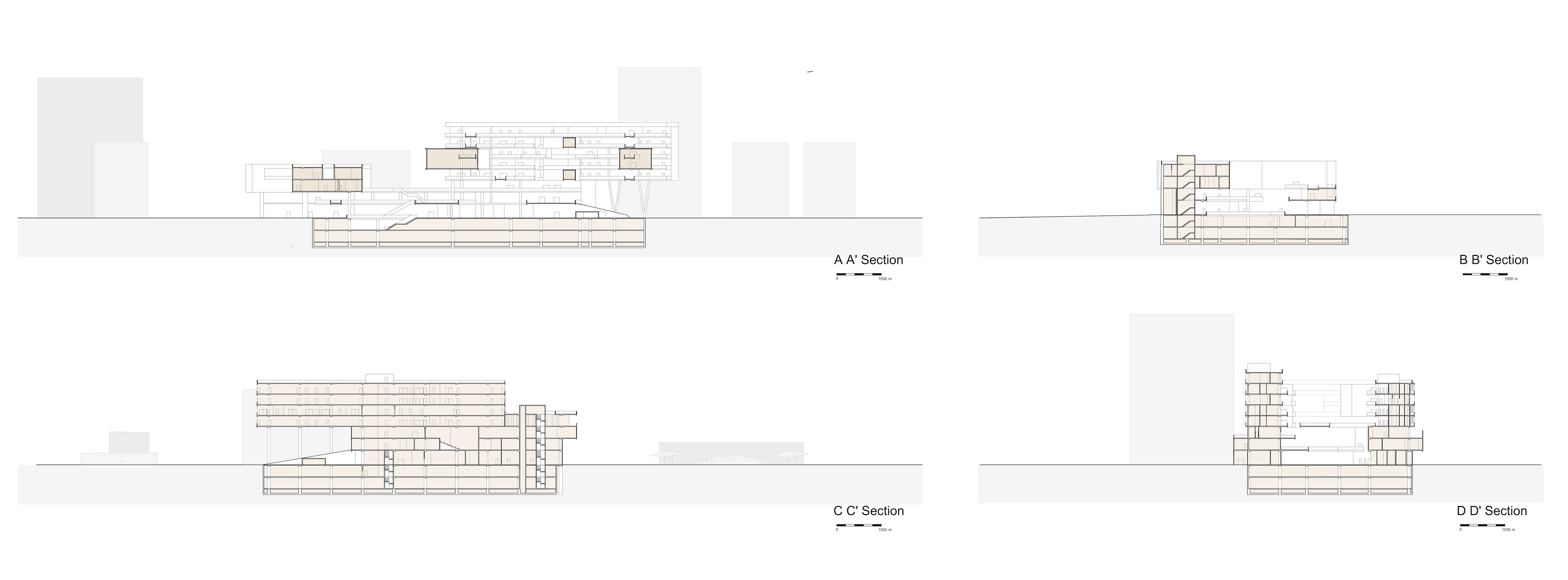
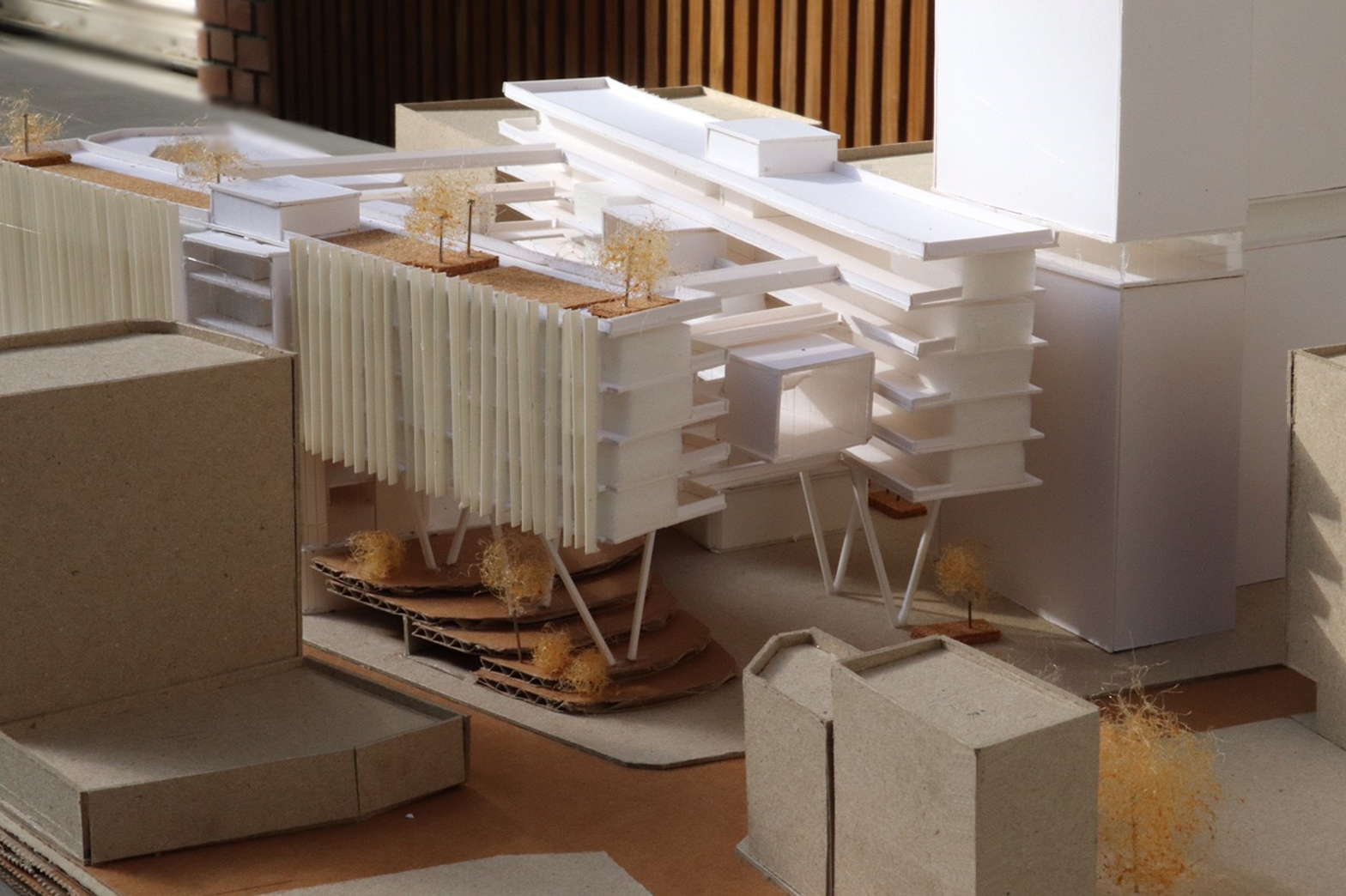
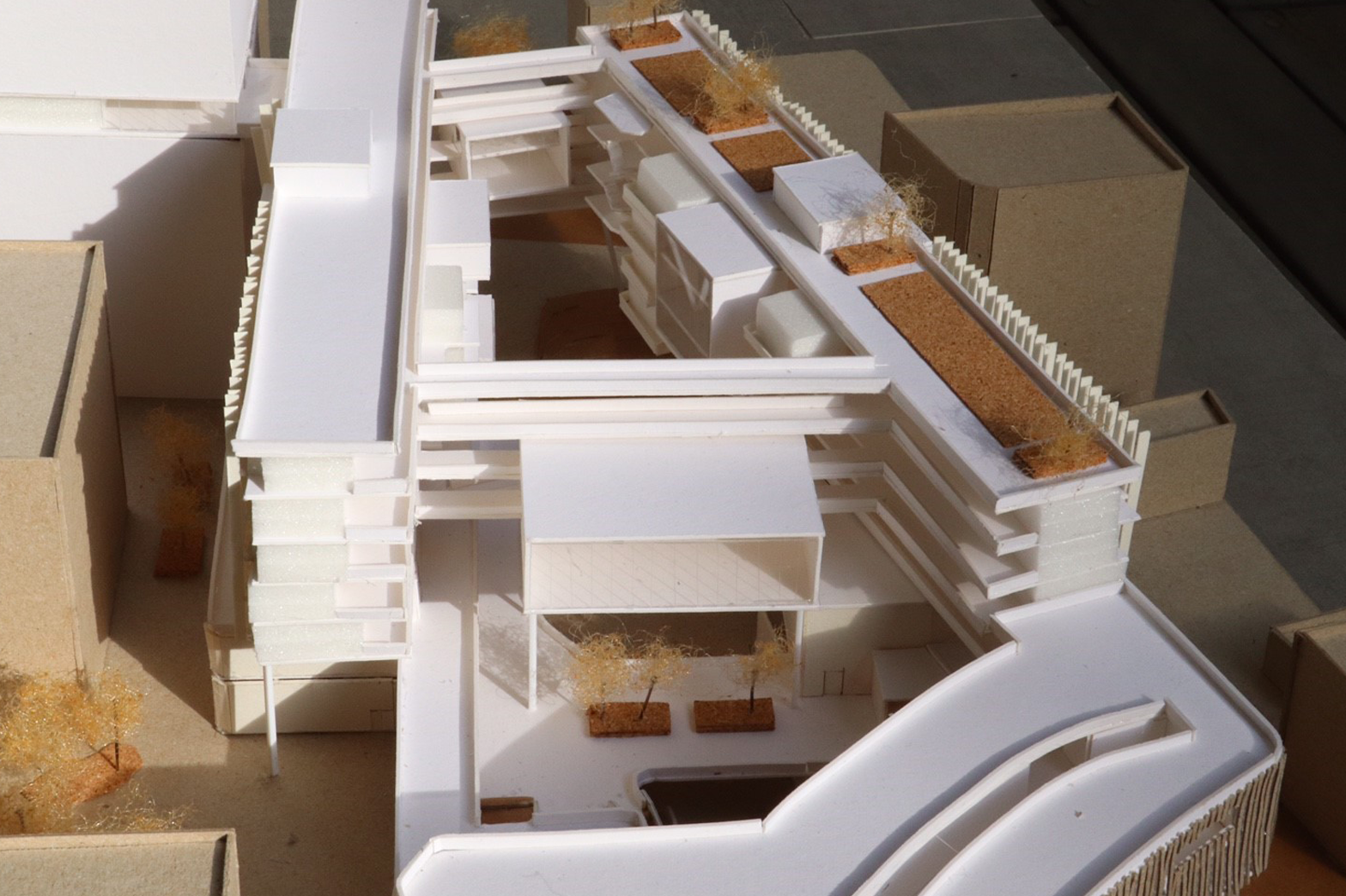
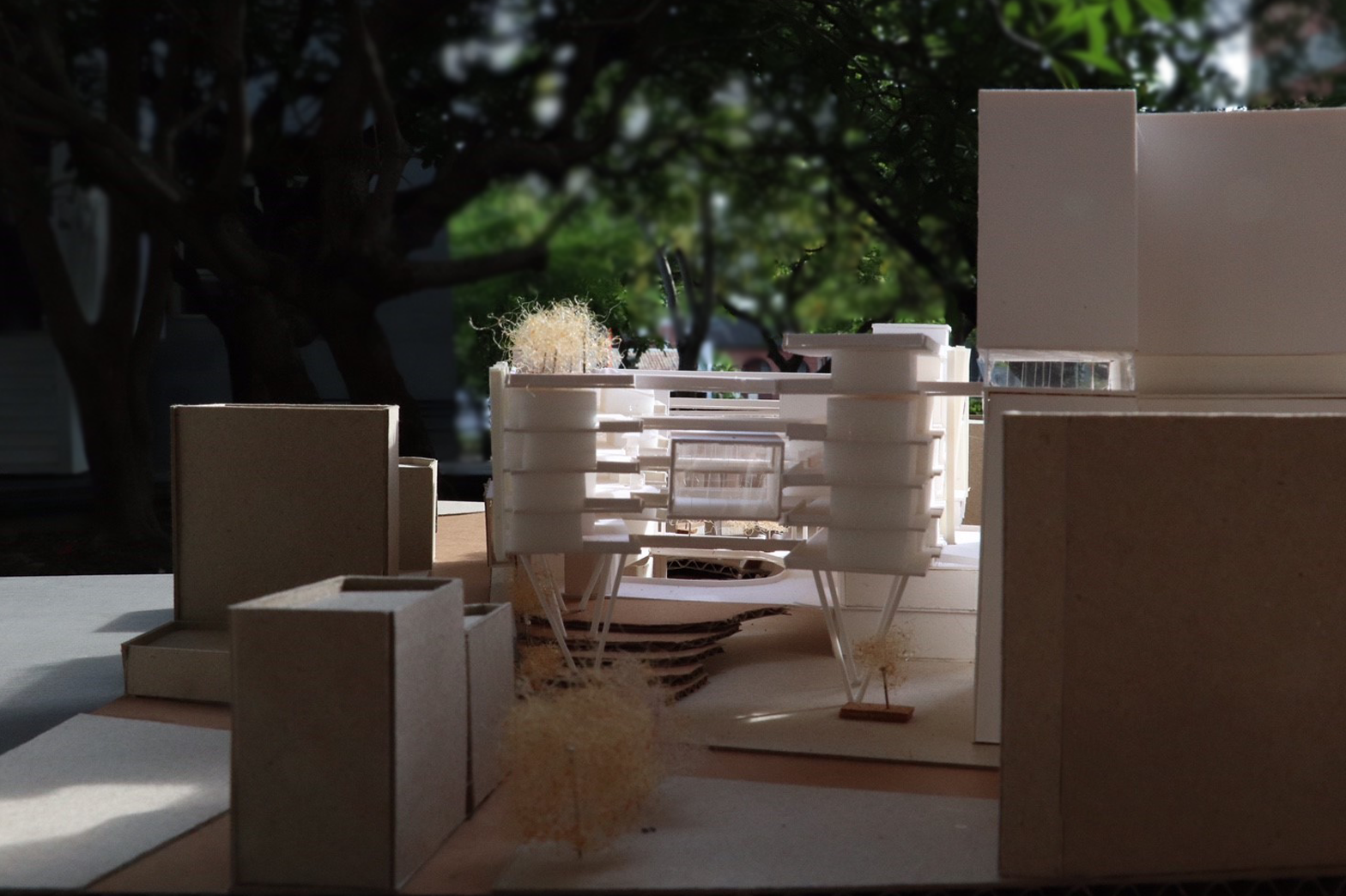
Cross-Age Hybrid Living was designed as a micro-city for living, start-ups, and visitors. From ground to top, it divides into several sections: its open space on lower floors leads people to flow into the site for connecting with the community and helping new companies to start business; its upper floors are rental dorms for the older and students to motivate their interaction under different generations.
Site Assumption
While the project undergoing, the train station has a major change: the Underground Railway Project of Tainan. The track will be changed into underground on the same spot and it will be complete after several years. Therefore, before we started the design, my team redesigned the urban structure around the site as below.
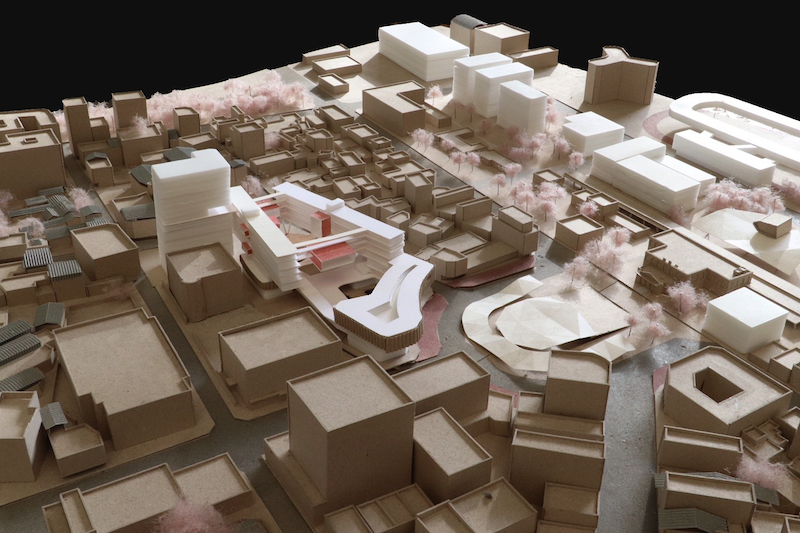
The square in the west front station was designed as a sunken plaza. The north and the south blocks changed their utilities into offices for startups and enterprises.

Concept of Cross Age
The concept started with an observation of street life. It consisted of several factors: Historical Fabrics, Local Communities, and Studio Hub.

Studio Hub
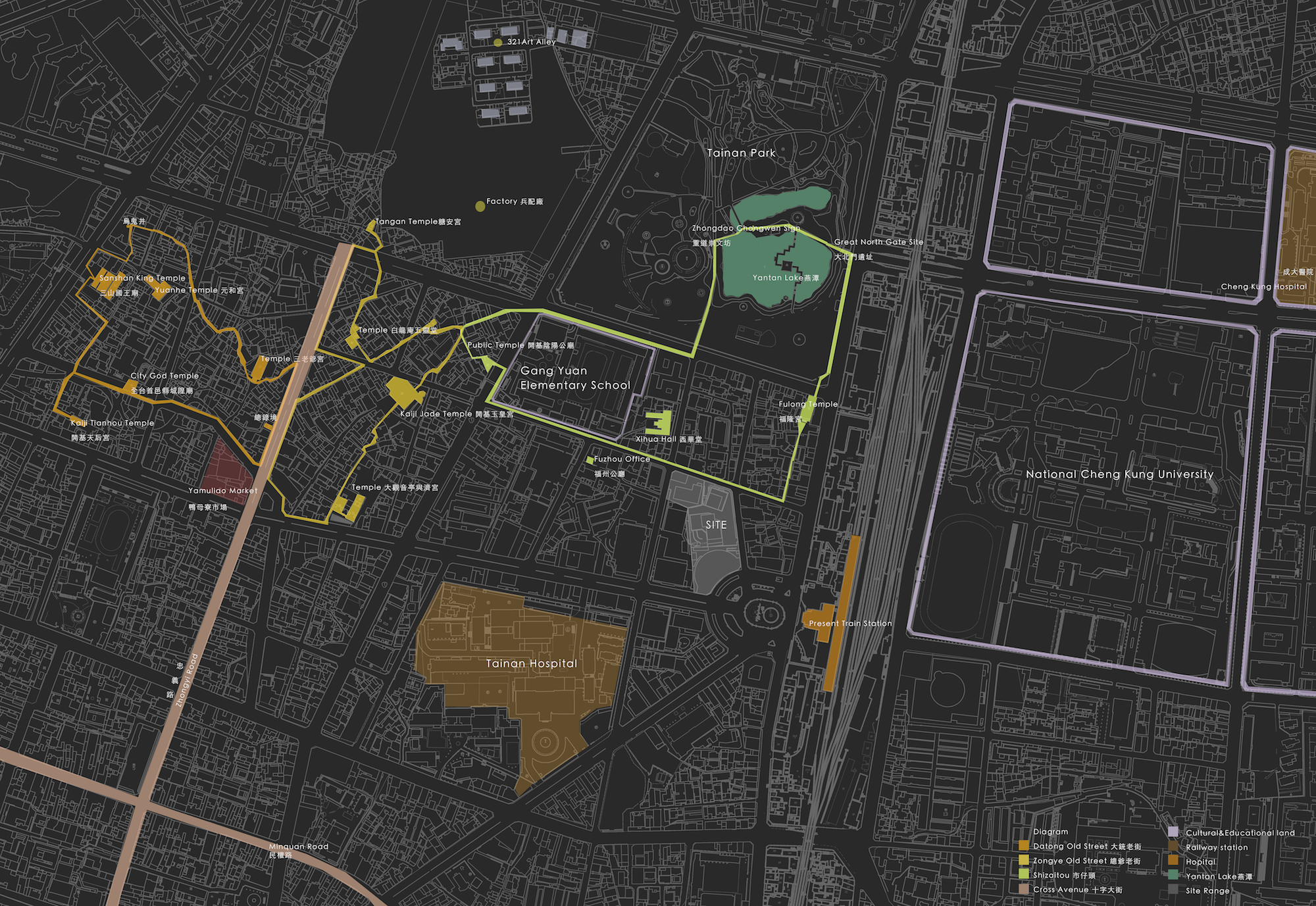
The west side of the train station is a campus area and the east side is a sophisticated area involving historical landmarks, hospitals, residents, shopping malls, and businesses. From the west to the east, the living space would be an incubation process from campus to workspace, combining all places mentioned above.

Local Community
According to the demographic statistics, around 20% of residents were above 65-year-old and most of them live alone. It’s inevitable that the young and the old would meet within this area. Therefore, to energize the community, the concept of co-living space would build the relationship and interaction between two different generations.

Demographic Statistics of North District
| Year 2018 | Num. of People | House Num. | Household size | above 65-yr-old % |
| Gongyuan Vil. | 2014 | 1043 | 1.93 | 23.39% |
| Changxing Vil. | 3255 | 1343 | 2.42 | 17.24% |
| North Hua Vil. | 4621 | 2144 | 2.16 | 20.30% |
| Student Dormitory | Num. of Beds |
| Male Dorm | 3318 |
| Female Dorm | 1908 |
| Master Dorm | 1296 |
| International Dorm | 680 |
| Total | 7196 |
Historical Fabrics
Tainan is full of history as the oldest city on the island for over 200 years of history. To follow the historical fabrics, the design corresponded to the two major historical paths in this area, consisting of temples and local historical sites, by dividing the ground open space into different sections for community activities from the station to the Tainan park.


Design Details
The Whole Picture of Site Plan
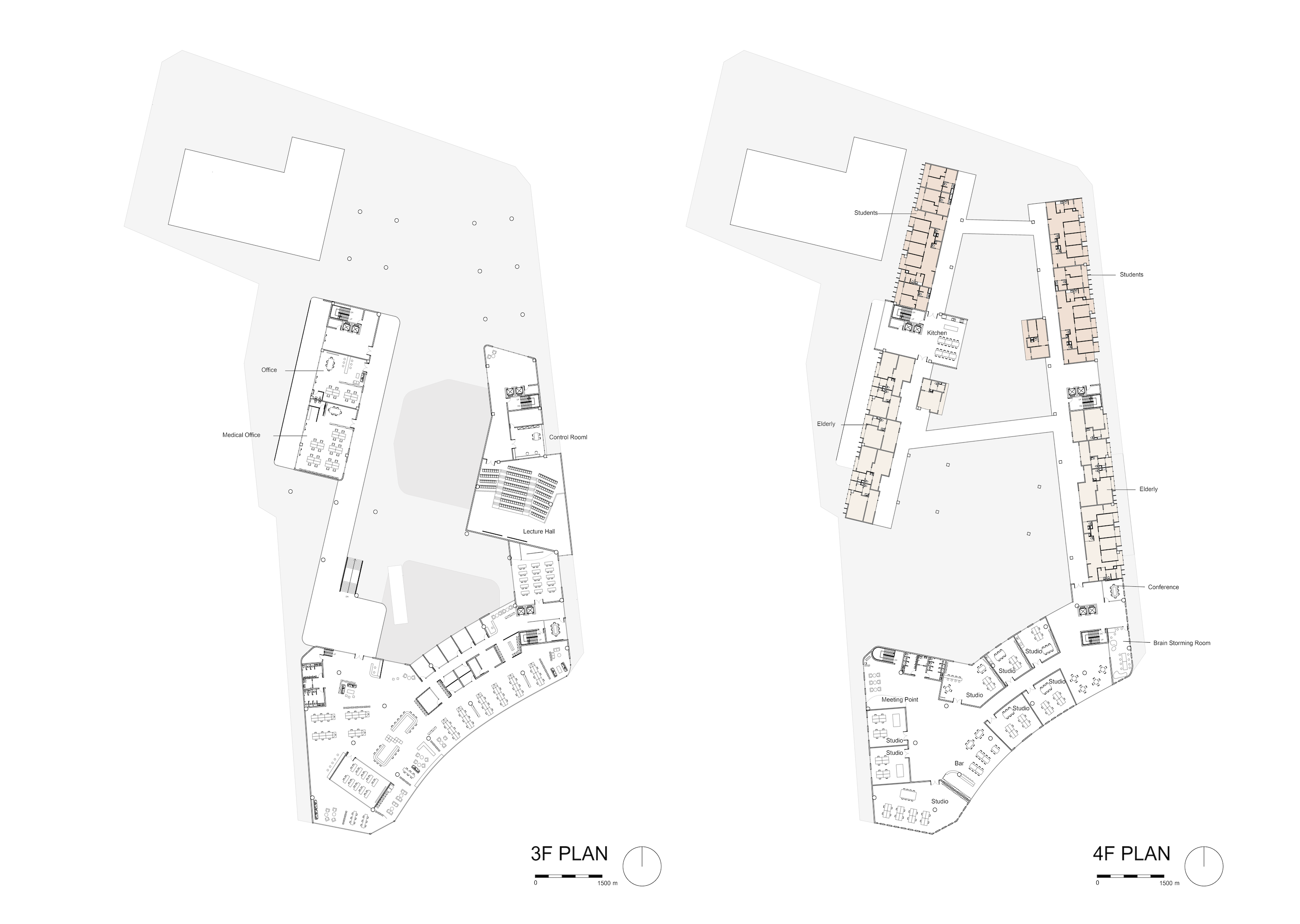
From south to north, the height from low to high corresponding to the sunken plaza on the west of the train station. An opening towards the south side on the ground floor led people to flow inside the open space for city activities. Divided by the square, the south side would be offices and shopping areas for the public and startups, and the north side would focus on the community.

The South Side: Stores, Offices, Studios
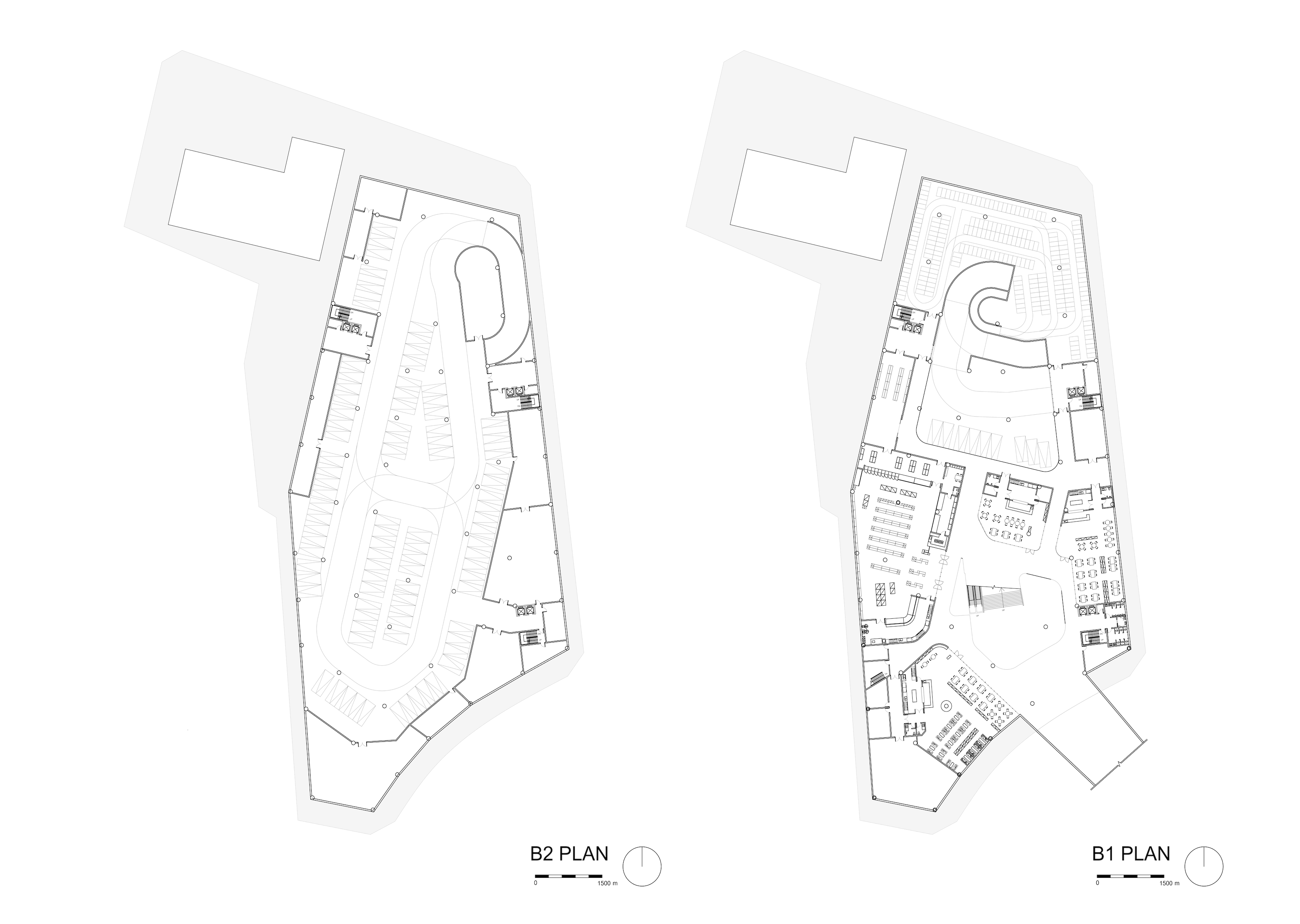
The south part was close to the train station and would counter lots of visitors and business people. As the advantage of transportation, It would be built for studios and offices for providing career opportunities for students and startups. Also, stores would be set on the first and the underground floors for tourists and residents, connecting to original shopping malls on the streets.

The Mid and North Side: Co-Living
The project was mainly designed as a rental living space. It consisted of the elderly, students, and common areas. To solve the problem of the aging community, this place would encourage young people to accompany old people who live alone and bridge the gap between the two generations.

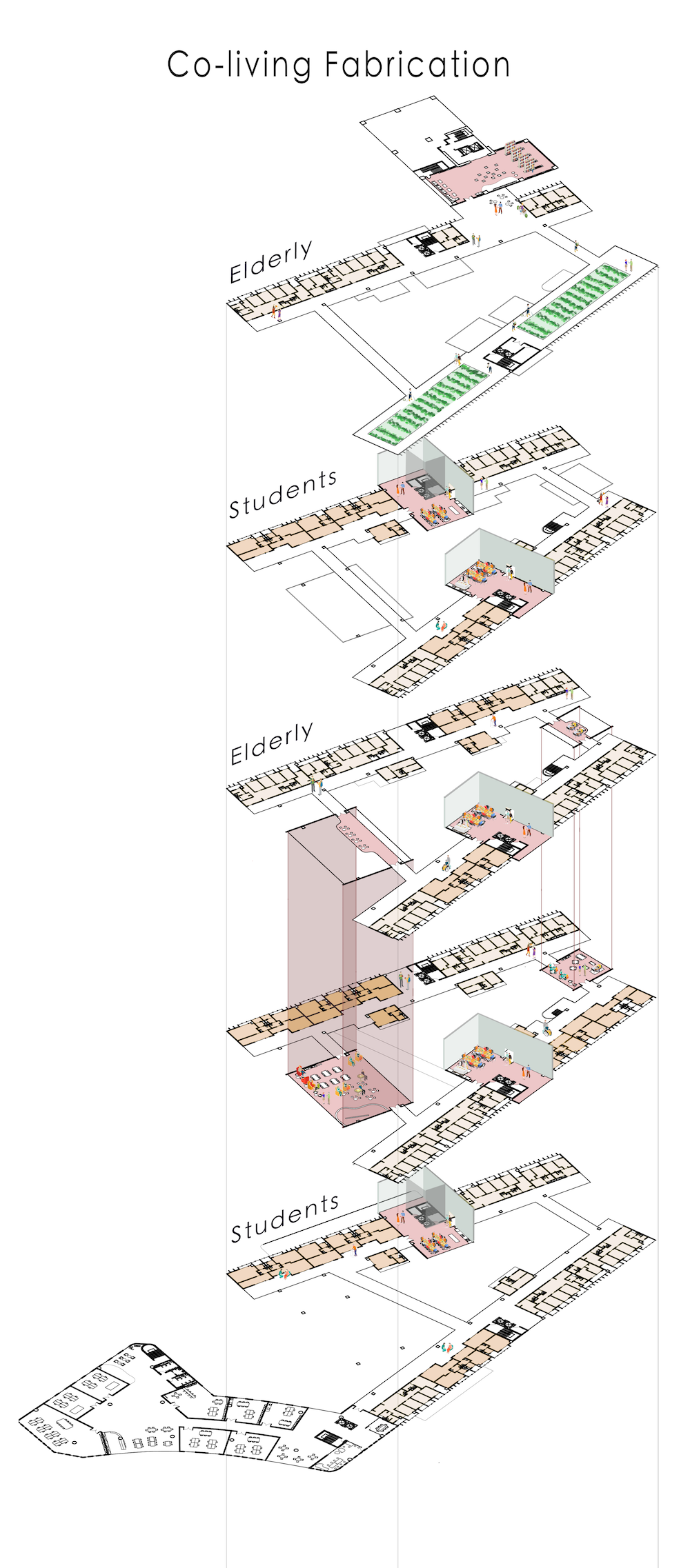
The dorms were arranged in staggered order for visual interactions. As to common spaces for physical interaction, it shall be the kitchen. The kitchen was a place where old people would share their stories with others and would be able to accelerate the engagement. To elaborate, old people who live alone liked to chat with others and see what going on on the streets. For instance, if a student is cooking in the kitchen, an old woman stops by and will come inside to share her special recipe. They will start to communicate and know each other during dining time.





 Tsai-Shiuan Weng