
Intersection Co-Work / Coworking Space and Offices
Year: 2018
Category: Academic Project
Type: Architecture Design
Advisor: Maungcang, Yan
My Role: Individual work
Location: North side of Dongning Rd. and West side of Linsen Rd., East District, Tainan, Taiwan
Area: 5475 m2
BCR: 50%
FAR: 250%
About
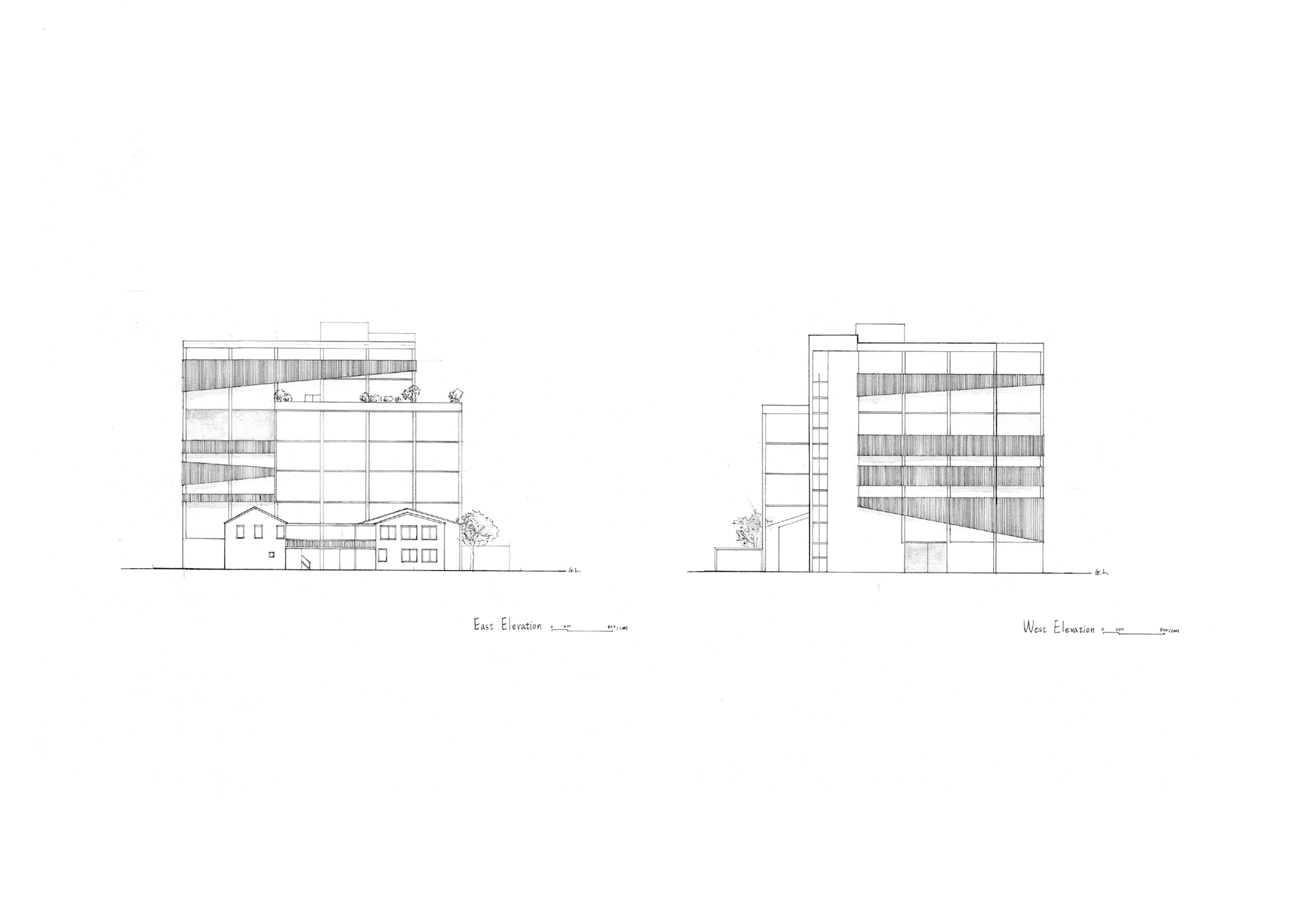
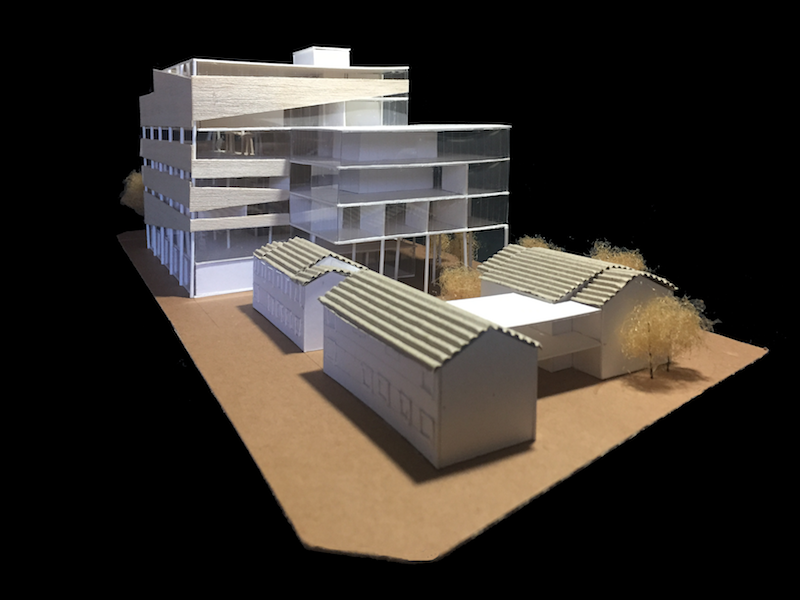
The co-working space was run by an enterprise to offer people rental offices and working spaces for combining industry-academia collaboration with innovative technology companies. The east side of the site had also left three houses as exhibition, kindergarten, and shops, integrating old and new into a new working space.
Concept
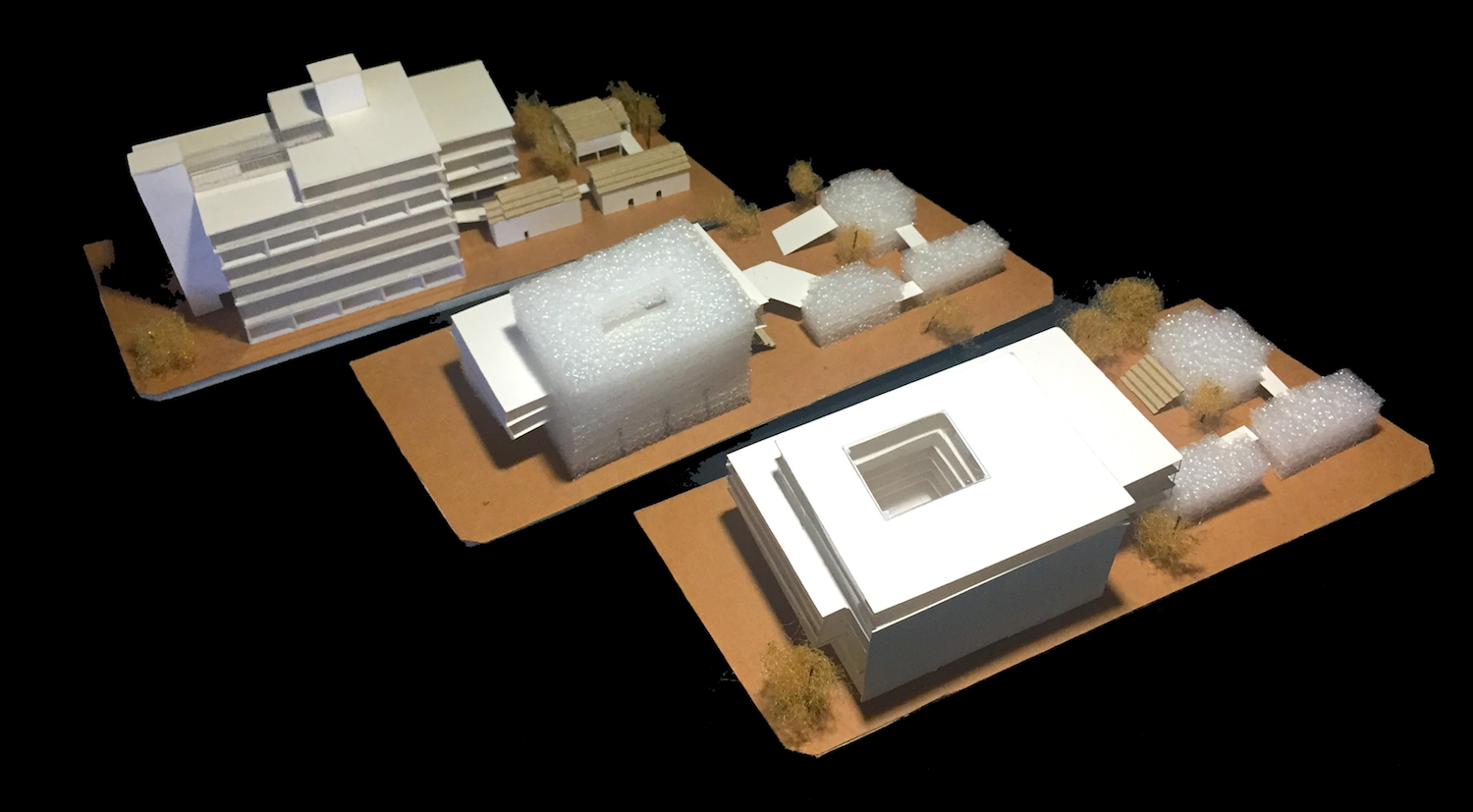
The concept was the integration of old and new. The orange area was the campus dorm for master students and school staff. The blue area was planned to change in the near future for the campus but was not 100% confirmed yet. The east of the side had originally four old idle houses. When the new collided with the old, new sparkle started. Students flowed into the site by walking down the north path, carrying their creativity to co-working space.


planning draft 
concept draft
Planning
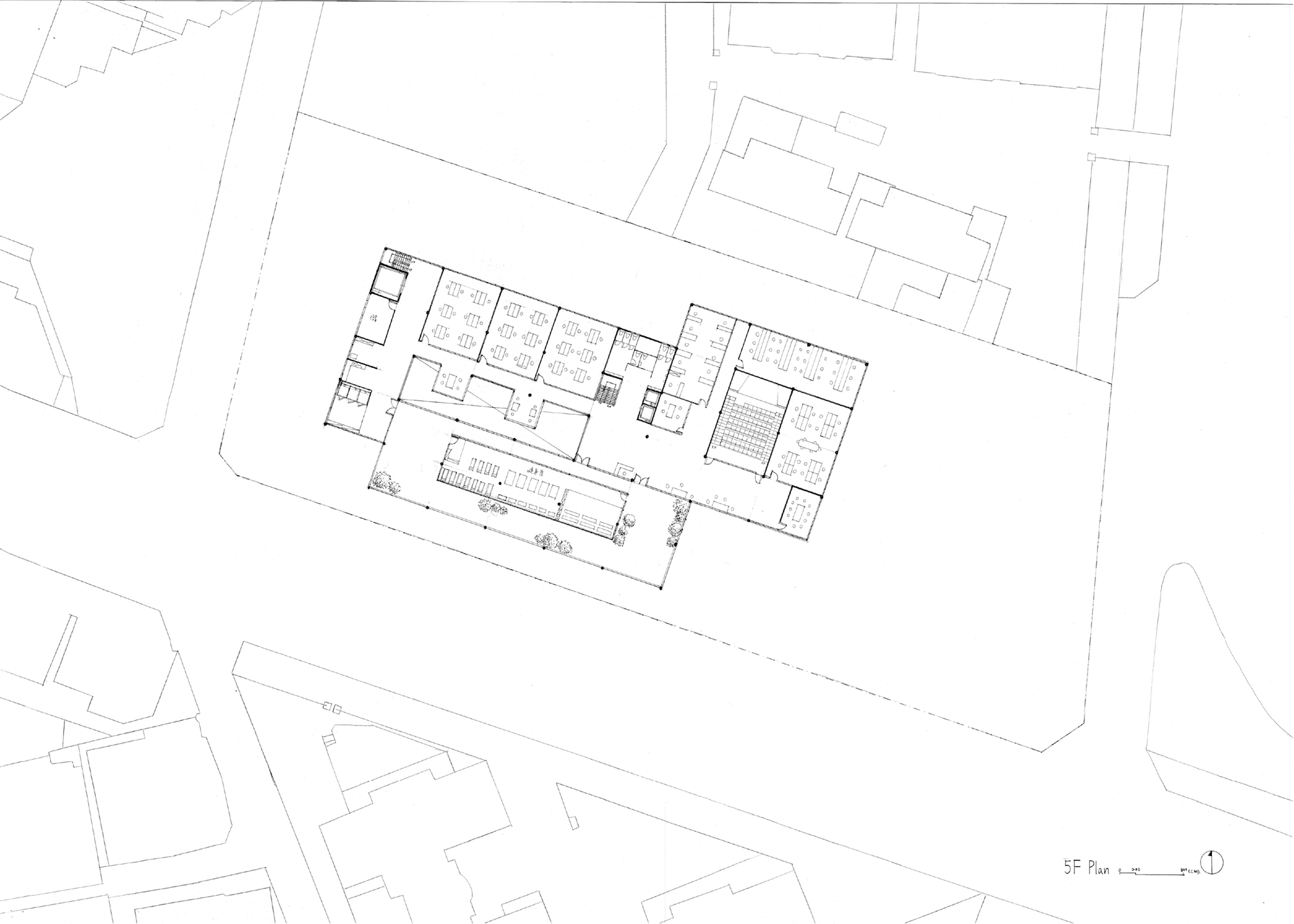
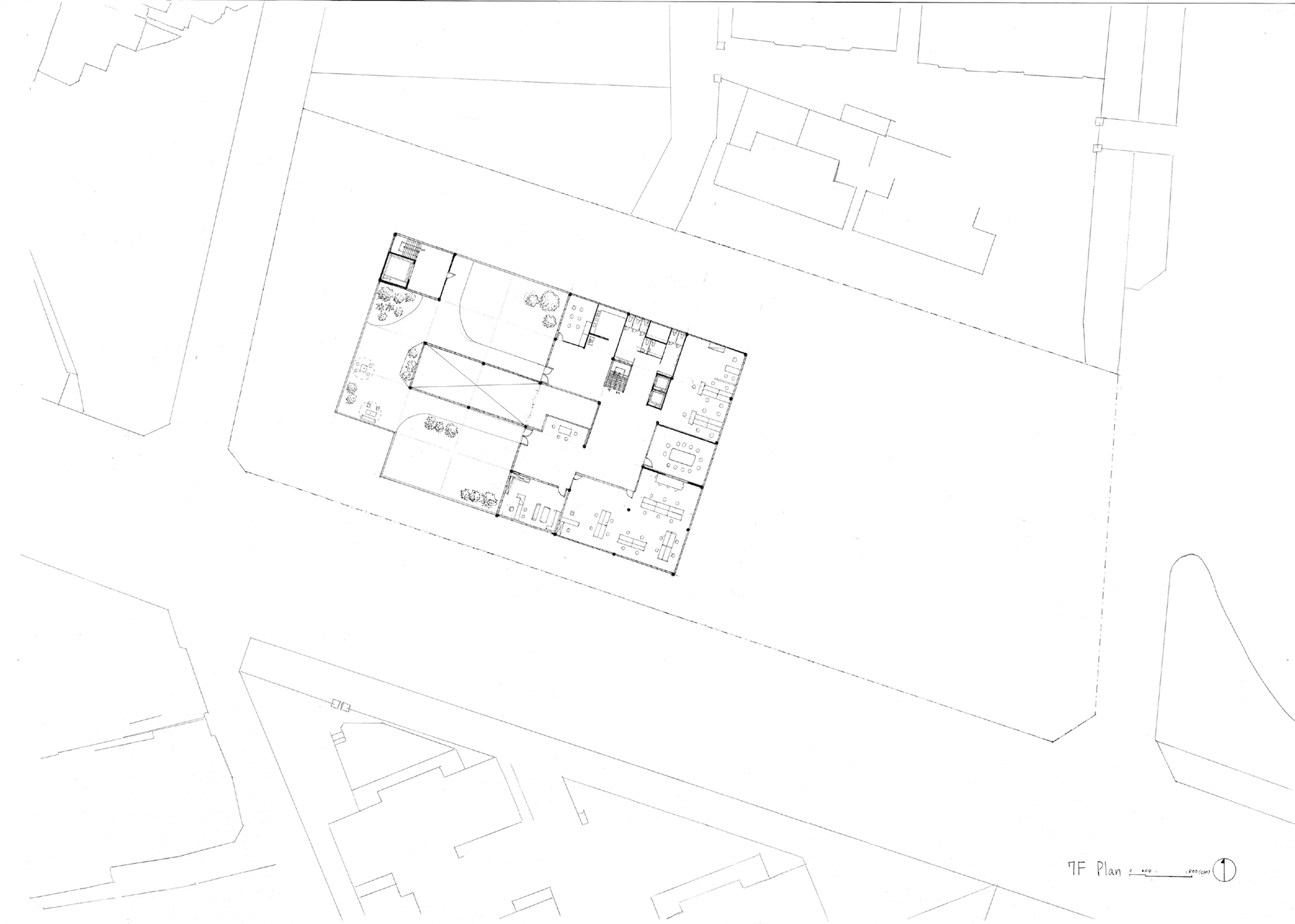
Headquarters (6F-7F)
- Company: Software Company
- People: around 130 employees
- Department (num. of people): Admin (38), Marketing (20), Business (20), R&D(35), MFG (5), Cowork(8)
Co-Work Office (3F-5F)
- Managed by Cowork Department
- Rental: Membership for company or individual
- Target – Individual/small group: Small size spaces, mainly at 3rd floor
Store and Community (1F-2F)
- Kindergarten
- Exhibition for Fdn. of Historic City Conversation And Regeneration
- Exhibition for Art Center of National Cheng Kung University

Design Details
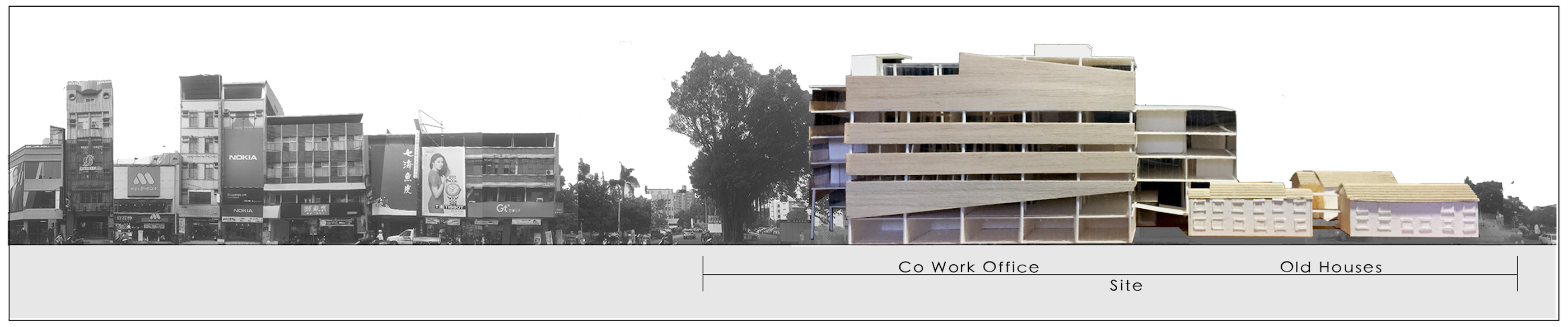
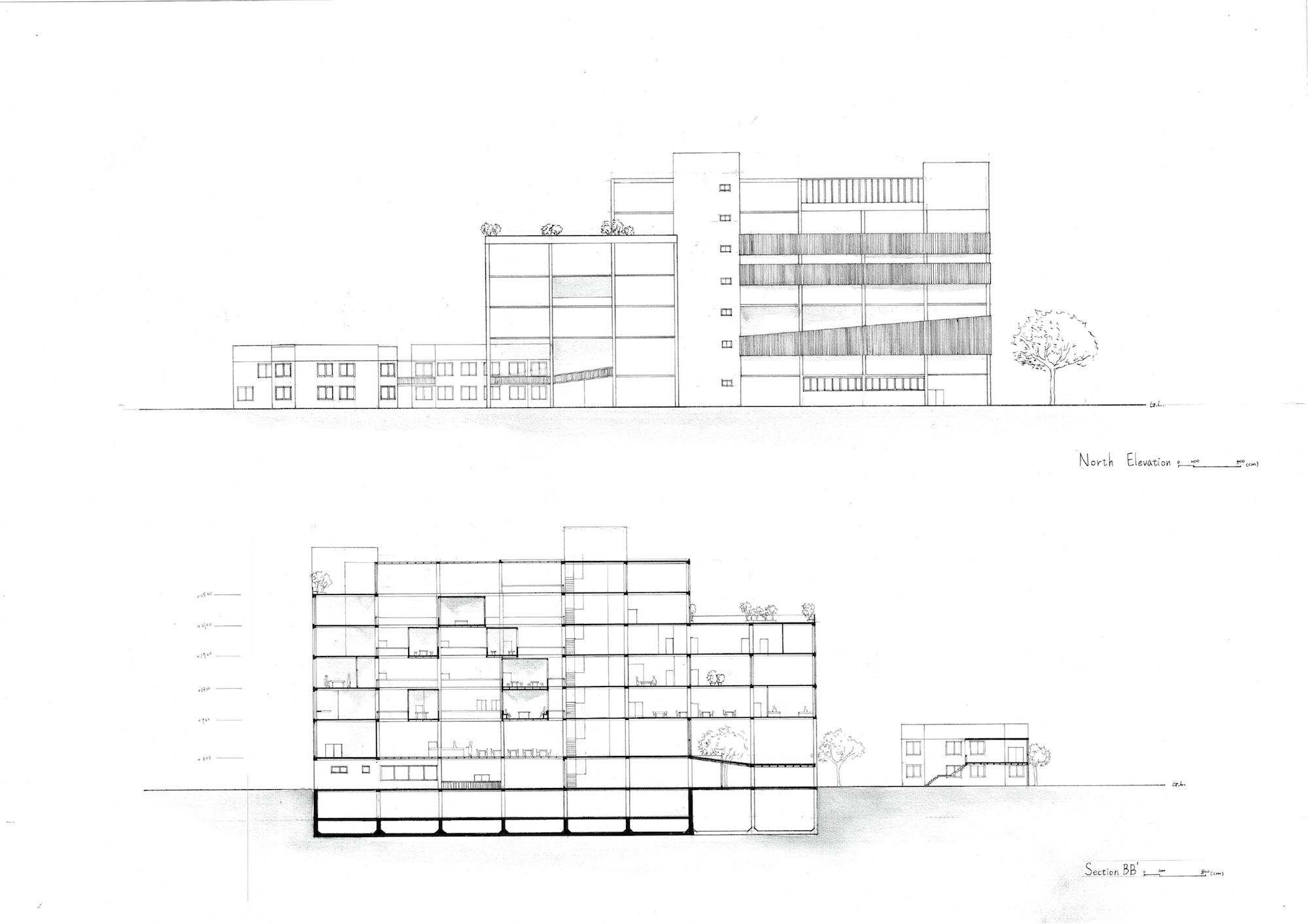
The new building was situated on the east side of the site and used its facade to deal with massive traffic on the south main road. Starting with the appearance, the south elevation was designed by horizontal axle direction to correspond to the old houses.
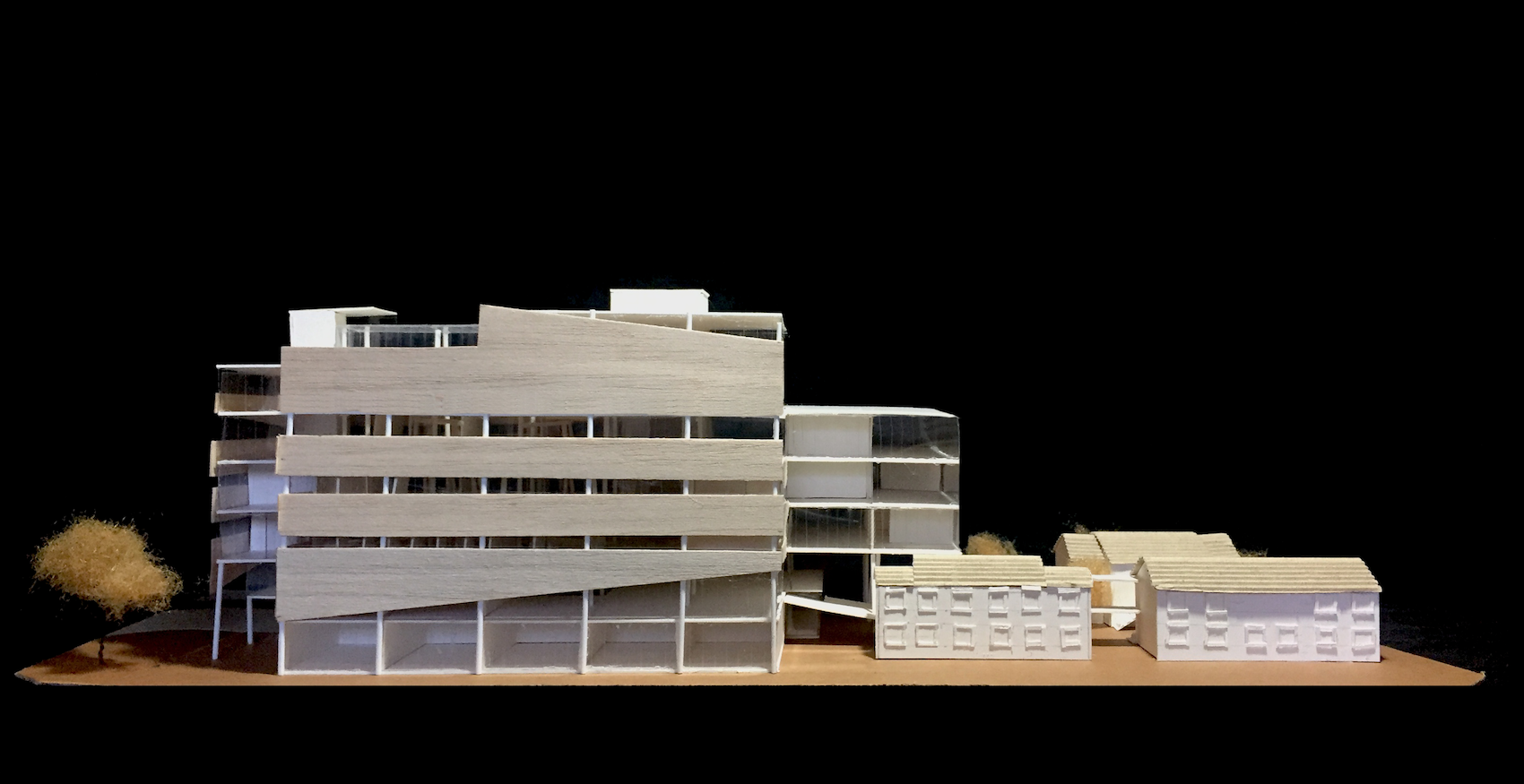
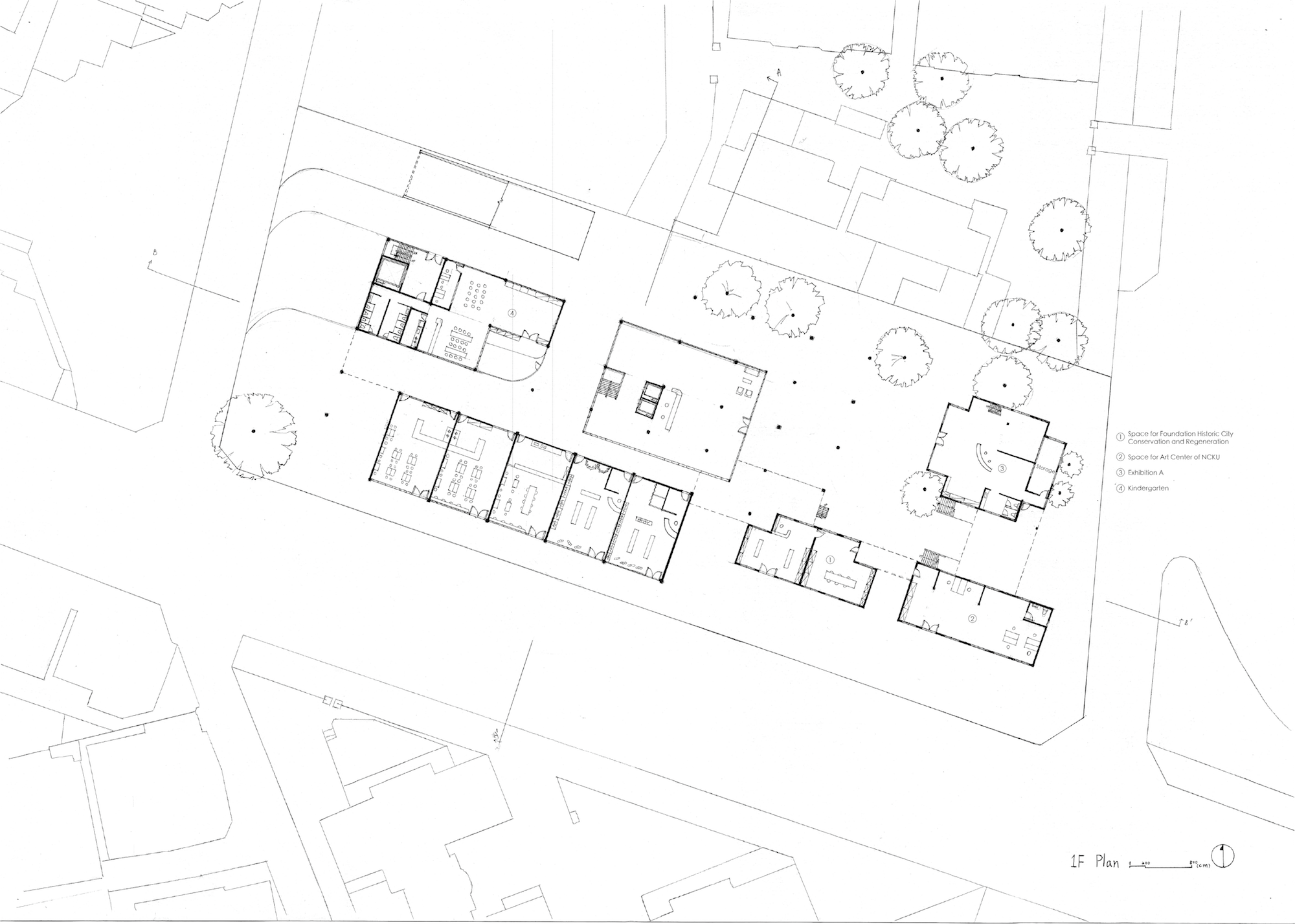
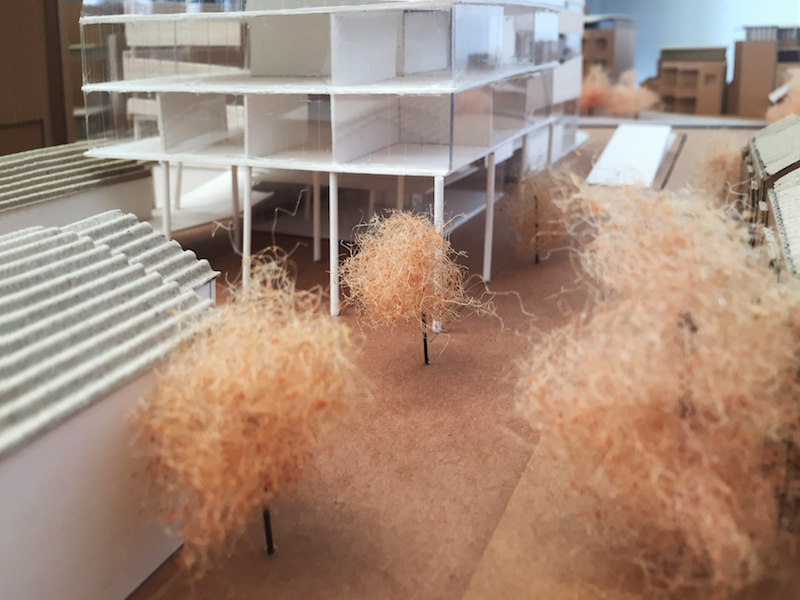
All buildings on the site were connected to each other by air corridors, leading to renovated houses to get connections with people, spaces, and each other. It created an open space between old houses and co-work offices, converging different paths and green lands shown in the site plan below.

While walking inside the site, visitors would meet the front stores and enter the square rounded by the renovated houses; business people would go through the middle path that divided the private and public spaces and enter the co-working office.
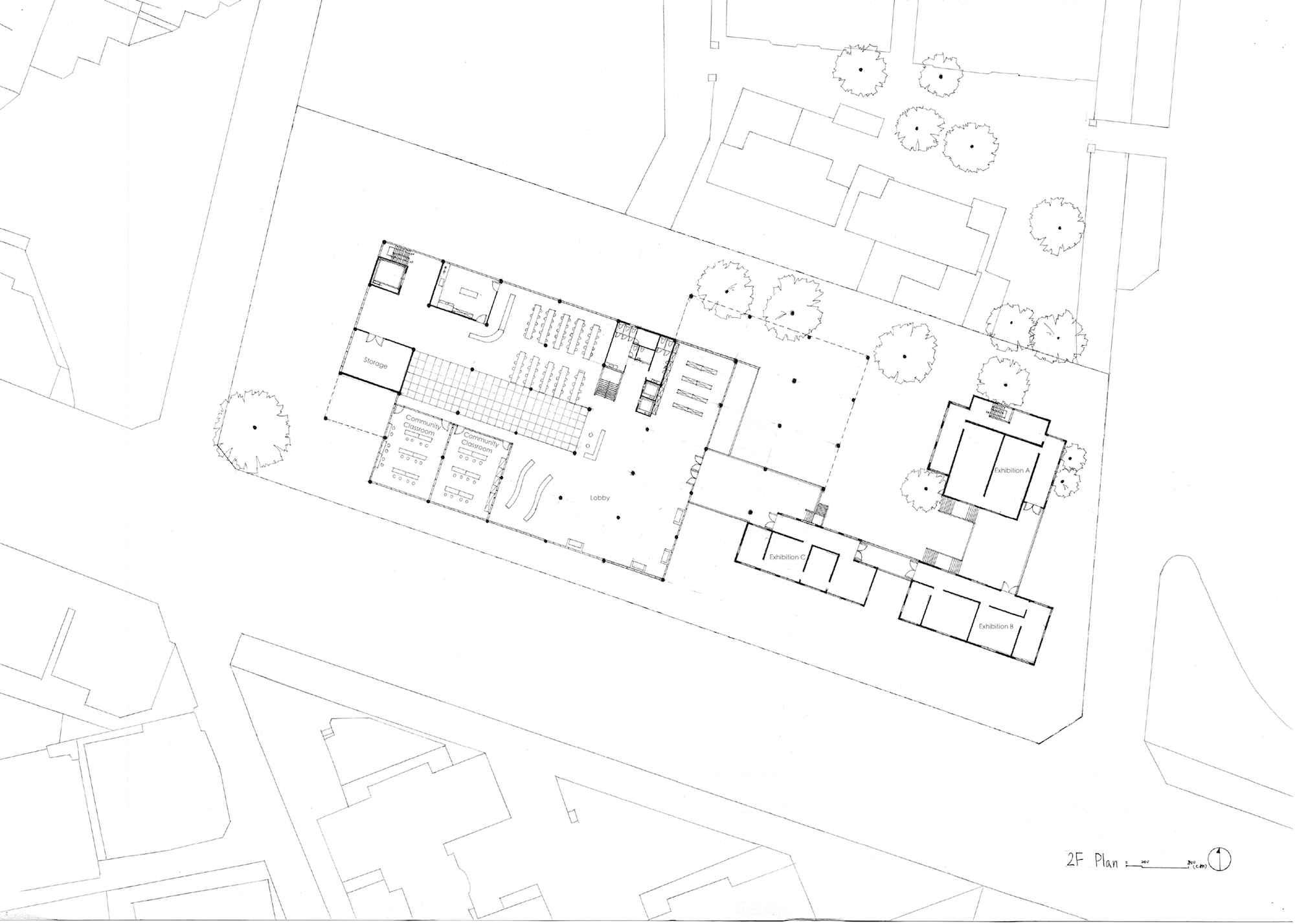
As to the inside of the building, the whole co-working spaces were separated into several sections, including:
- Conventional Co-Working Space for freelancers, entrepreneurs, and small start-ups;
- Specialized Co-Working Spaces for niche customer needs in specific locations;
- Fancy Co-Working Space with modern necessities of working professionals;
- Open Co-Working Space with part-time desks, private desks, and/or team cabins;
- Incubator/Accelerator cum Coworking space for stimulating and growing your business.

Besides, the main concept of integration was also presented within the building, that is, atrium space. Small units were located randomly within the space as open discussion rooms and conference rooms. With all different types of offices, the co-working space would be abundant with creativity and motivated people here to become an innovative community to promote their ideas and business.








 Tsai-Shiuan Weng