
Revolving Office | Office of FHCCR
Year: 2017
Category: Academic Project
Type: Architecture Design
Advisor: Yenling Chen
My Role: Individual work
Location: No. 73, Zhongshan Rd., West Central Dist., Tainan, Taiwan
Area: 160 m2
BCR: 80%
FAR: 320%
About
The revolving office was designed as the Office of Foundation Historic City Conservation and Regeneration, with a store, a workshop, and an office for approximately ten employees.
Concept
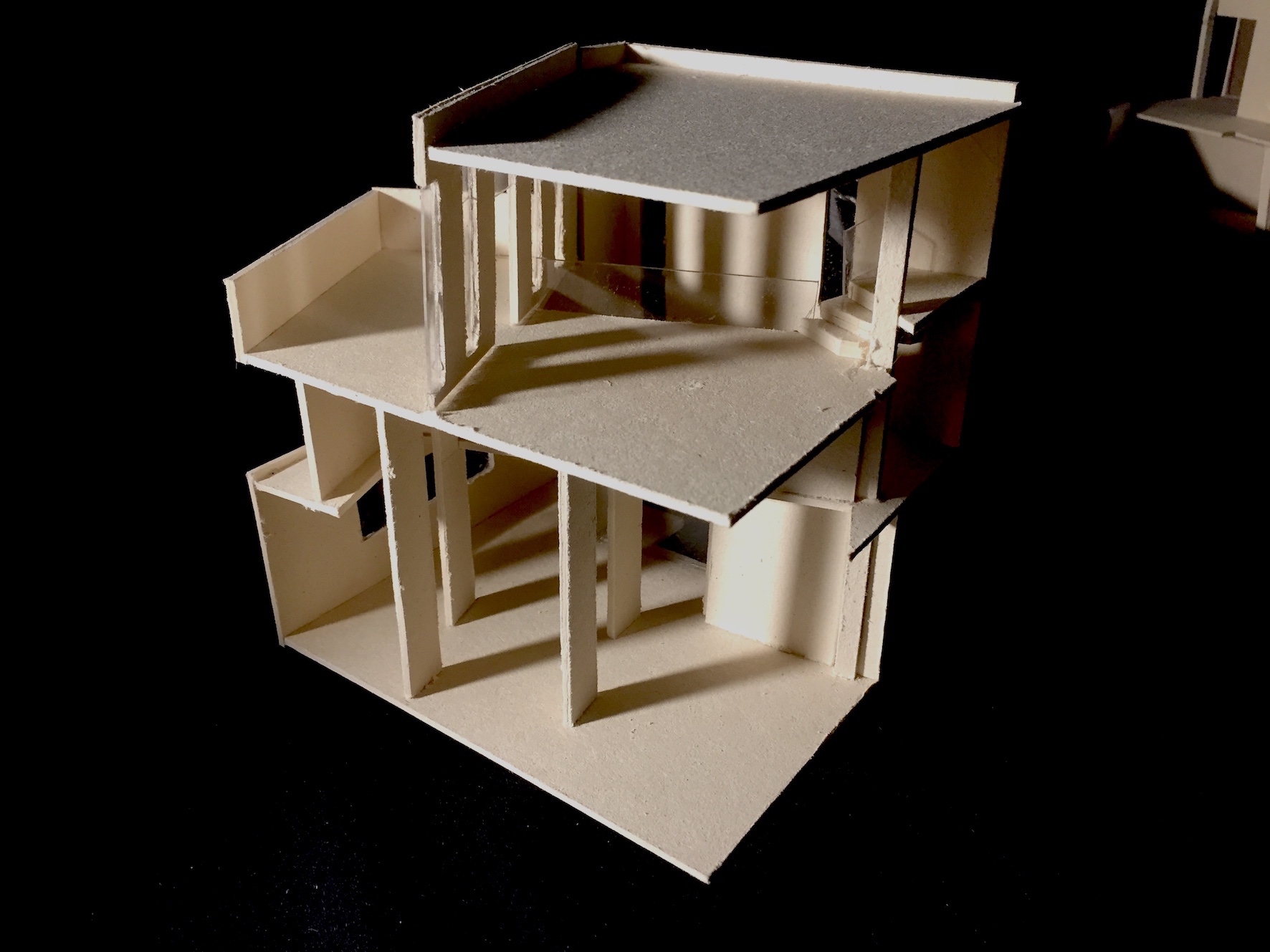
The basic floor shape was a rectangle, which was how the concept started. Responding to “historic city conservation,” the project found the fundamental element, rectangle, as the main factor to develop. From still to dynamic, rectangles could be revolved into stable but flexible for different purposes. Therefore, the project followed this revolving rule inside out, named “Revolving Office.”

Problem Solving
The main problem was to balance between the office and the weaving workshop. The noise made from the weaving workshop would affect working spaces. In the meantime, employees would need to fully understand and oversee the situation of the workshop. There would be intense interaction and frequent communication between them. Consequently, following the concept, horizontal and vertical layers would be essential to solve the paradox.

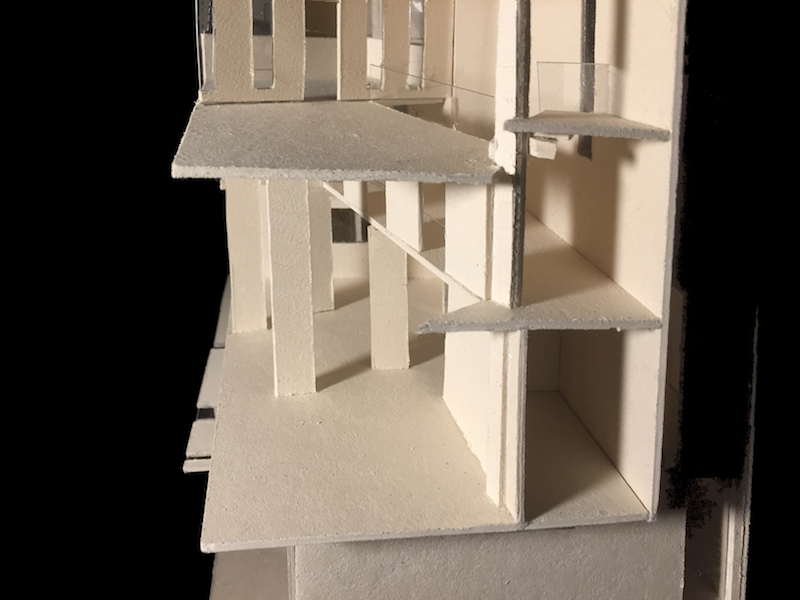
Extending the concept of revolving rectangles, there were two kinds of layers: horizontal and vertical. The former one was the floors and the latter one was the vertical walls that stood on the workshop to block the sound of the weaving machines and to avoid distracted eye contact. That was how the solution formed.
Design Details
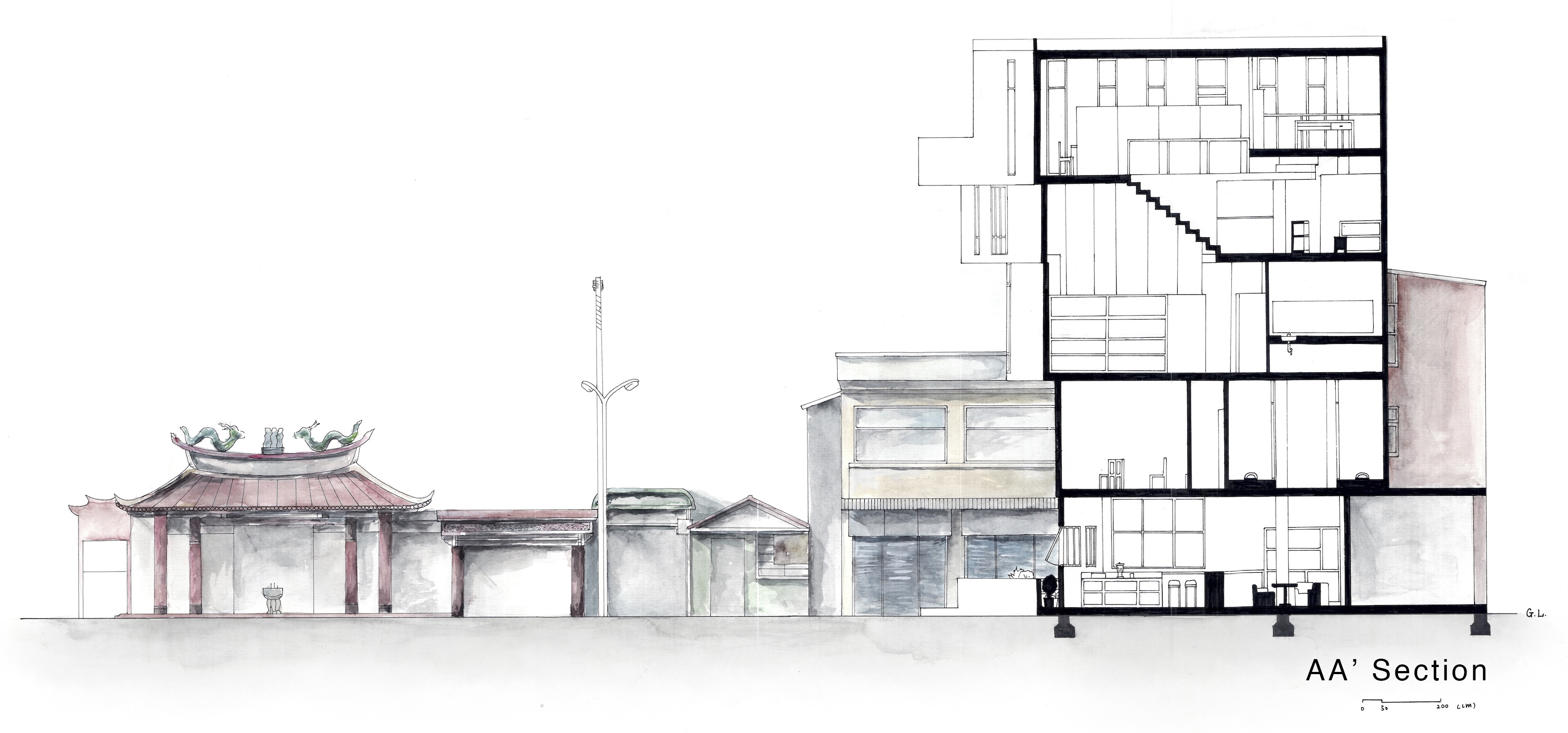
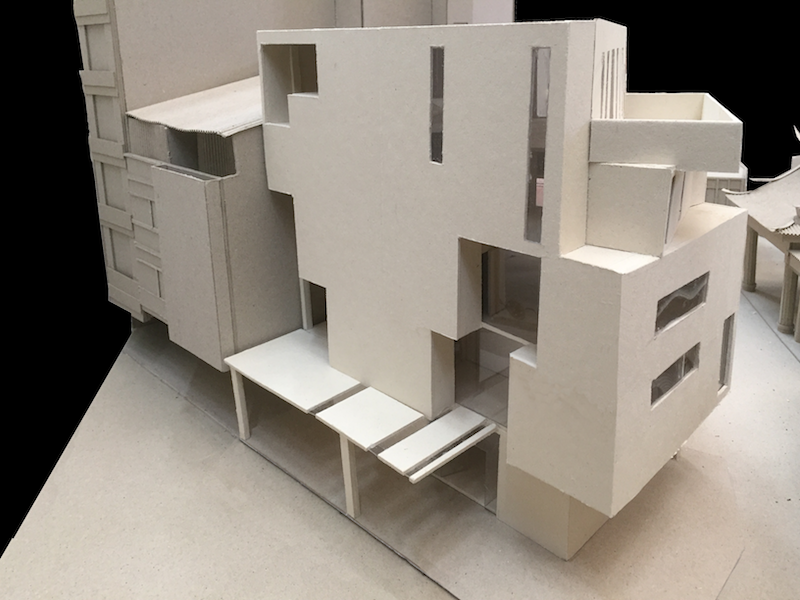
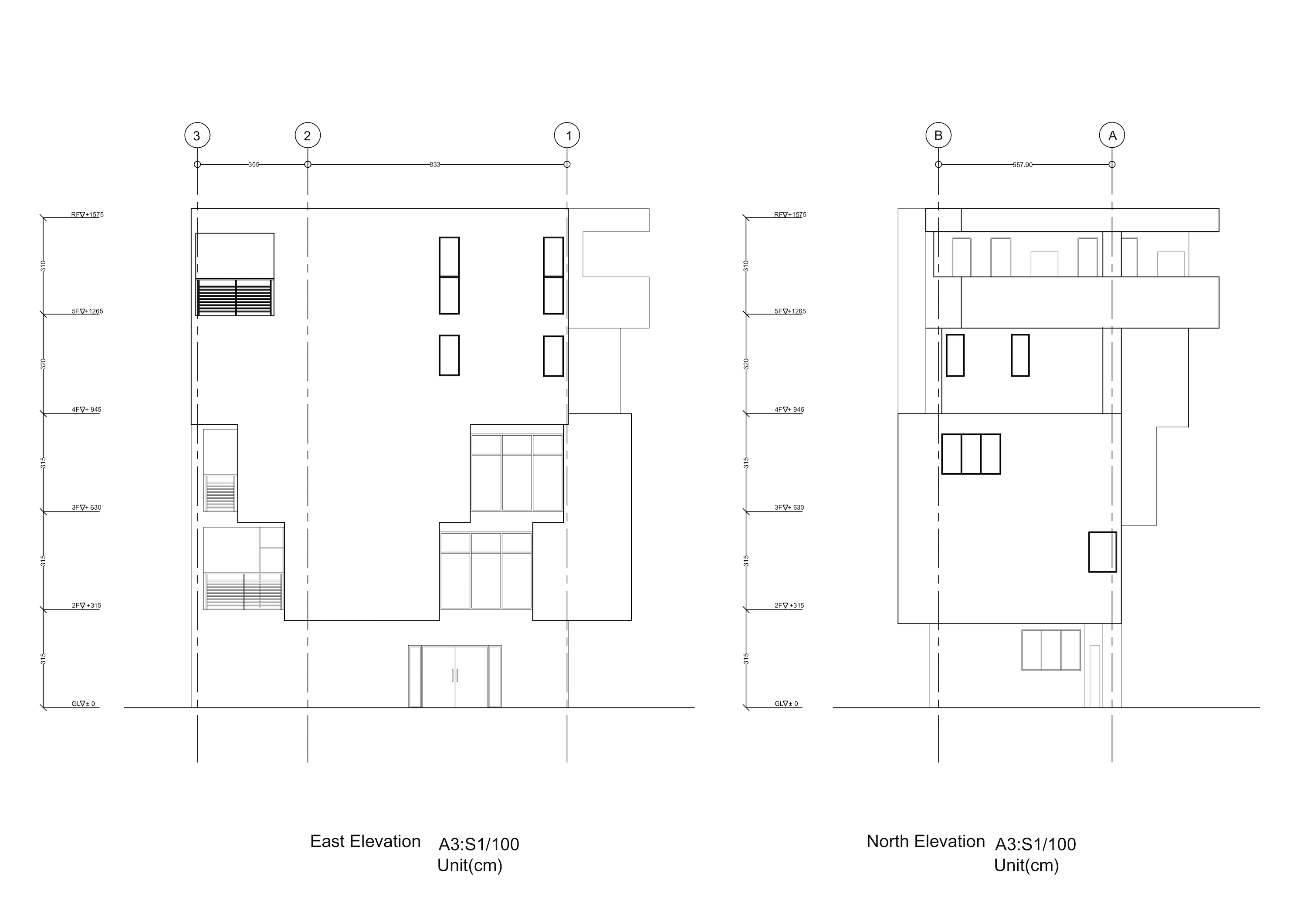
Following the revolving concept, the building formed inside out. Each floor revolved in a certain degree to wrap the temple court (廟埕) in the alley. This half-open negative space led people to flow into it, becoming a showcase for the temple’s events and local religious life.

The multiple and revolving layers created several spaces for discussion and made people’s sights connect to each other.

With the solution mentioned before, long vertical walls created positive and negative spaces for interaction among different spaces. Consequently, on the upper floors, people could easily reach the balance between seeing what happened outside and reacting to what happened inside.



 Tsai-Shiuan Weng