

Shopping Area Diversity
Overview
Bringing science into the design, the project provides the prototype of shopping areas in Tainan as an approach for future urban plans.
Year: 2019
Category: Academic Project
Type: Analysis and Urban Design
Location: Tainan, Taiwan
Advisor: Naichun Chen
My Role: Individual Work
Tools: Python, YoloV3, Tableau, QGIS, Photoshop, Illustrator, AutoCAD
Framework
DATA
Stores Data
stores' types, locations and comments on Google map
Computer Vision
photos collections of stalls, vendor umbrellas, awnings, shop signs and street elevations
Transportation Data
locations of bus stops, T-bikes and parking lots
Road Width
roads' size analysis by aerial photographs
Comments on Forum
Posts on PTT
FRAMEWORK
Analysis of Stores' Data
A. Analysis of Store Type
     a. Stores' Location
     b. Shopping Area
          - Store Type Diversity Pie Chart
B. Analysis of Objects' Data
     a. Computer vision
     b. Objects Ratio
          - Ratio Pie Chart
C. Correlation Analysis between Store Types and Objects
     a. Correlation
Transportation Data Analysis
A. Transportation Analysis
     a. Bus stop walking range
     b. T-bike walking range
     c. Parking lot walking range
B. Relations between Transportation and Street Fabrics
     a. WordCloud
         - Comments on Google map
     b. Streets and Roads
         - Analysis of Roads' size
CONCLUSION
Store Diversity
A. Six-prototype
B. Features of high and low diversity
Future Proposal
A. Problems
     a. Analysis result of Word Cloud
B. Improvement Proposals for Shopping Areas
     a. Yamuliao Market
     b. Zhongzheng Guohu
     c. Confucian Temple
Observation
The story started with my life in Tainan. The old blocks lacking sidewalks were always a trouble for the residents. People feel less comfortable with walkability. Within shopping areas, I found out that one of the causes was stores. Lots of shopkeepers put tables or equipment on the sidewalk, making it too narrow to walk. There are several types as below:
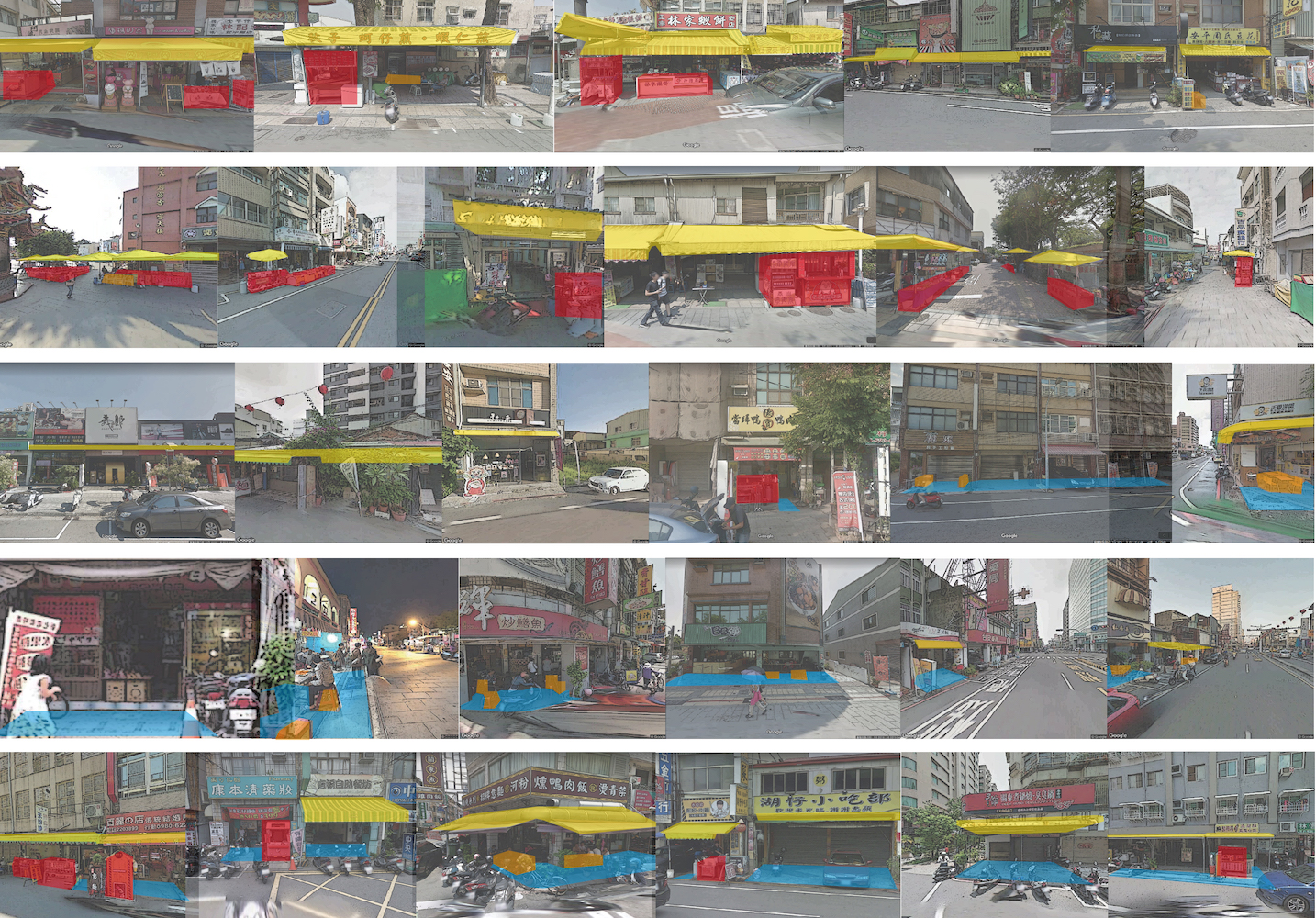
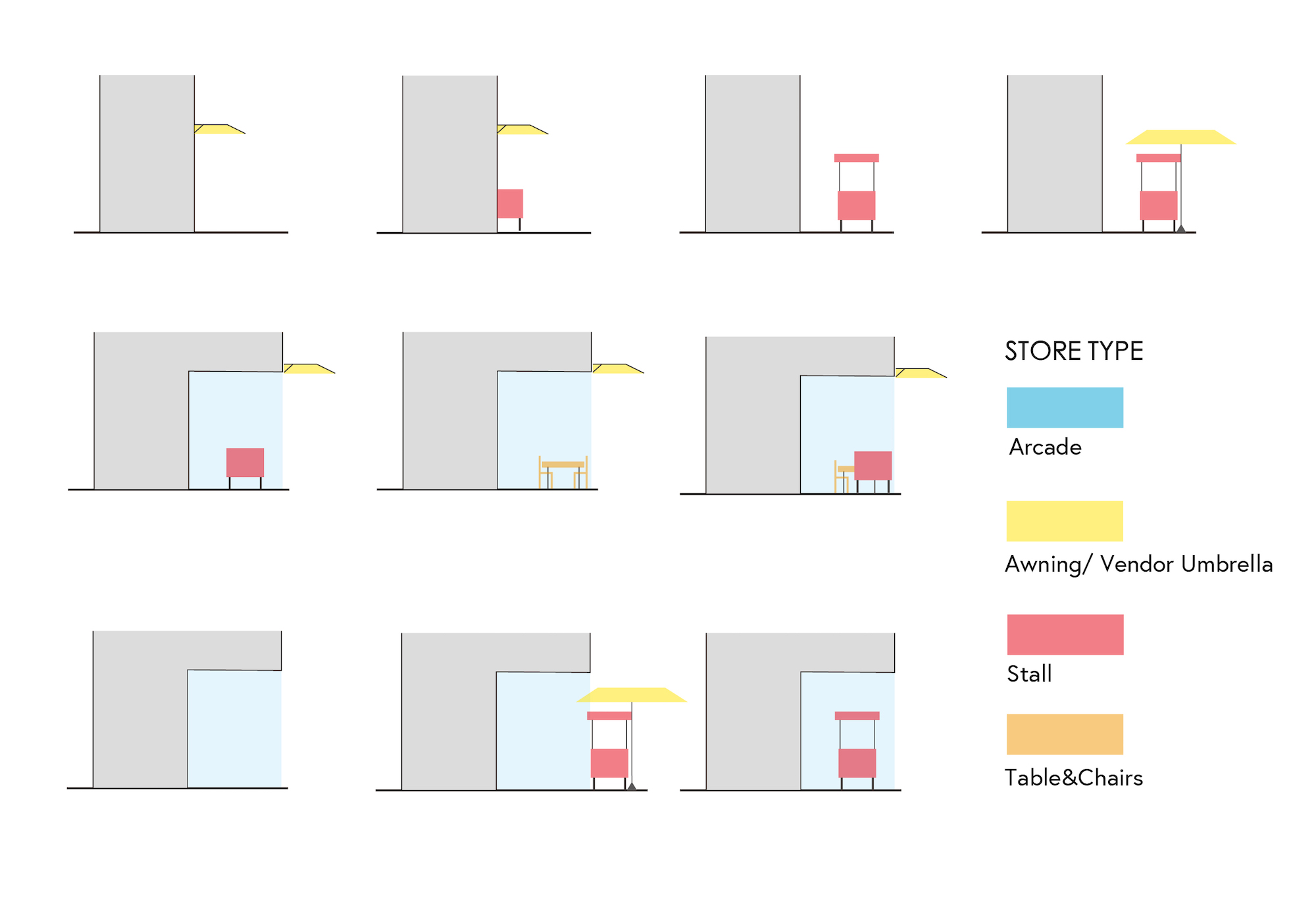
Problems
Based on observation of how stores occupy walking spaces, it led to several problems, including walkability and city image. Shopkeepers and vendors may intentionally or unintentionally cause inconvenience for pedestrians. The irregular store types may also damage the beauty of the city when putting everything on the street.
The solution to beautify street views was complex since it involved various social groups. In years, architects and urbanists tried to improve it but the solution generally lasted only for a short time. Thus, it occurred to me HOW about BRINGING SCIENCE INTO THE DESIGN as a useful principle?
Purpose
Combining data analysis with design techniques, I aimed to find the PROTOTYPE of the streets, providing a solution for further IMPROVEMENT. That is, improvements would be able to follow urban fabrics and change the city image more effectively.

Research Range: Anping District, West Central District, North District, East District.
Data Analysis
Part 1: Analysis of Stores’ Data
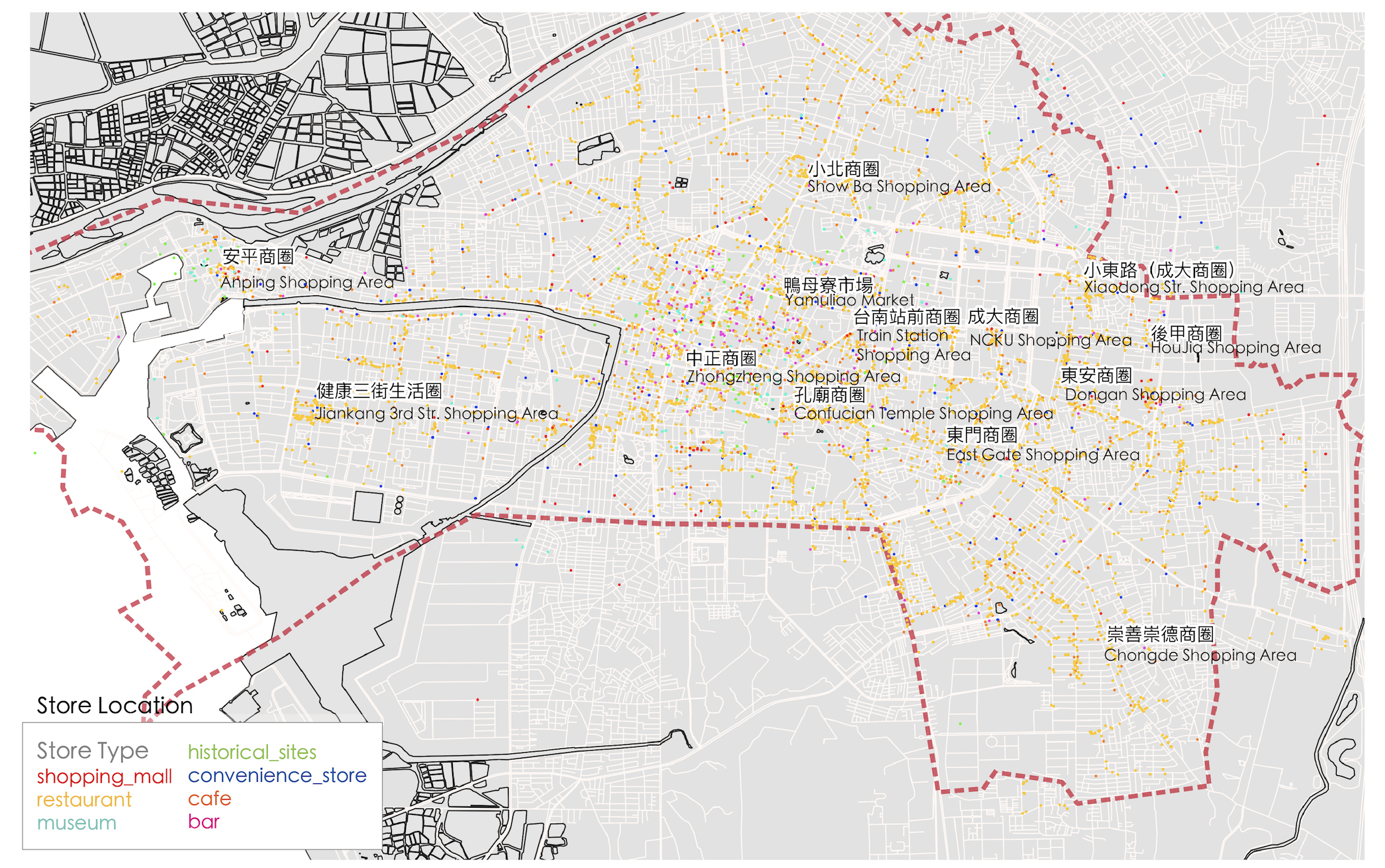
As a start, I collected over 7k datasets from Google Maps in 7 types of stores for each shopping area and transformed them into ratio pie charts.
- Assumption Shopping Area: radius 300m
- 7 types of stores: shopping_mall, restaurant, museum, historical_site, convenience_store, cafe, and bar.
Then, I selected 6 shopping areas according to the result of diversity, including the highest, the lowest, and the medium ones with different characteristics.
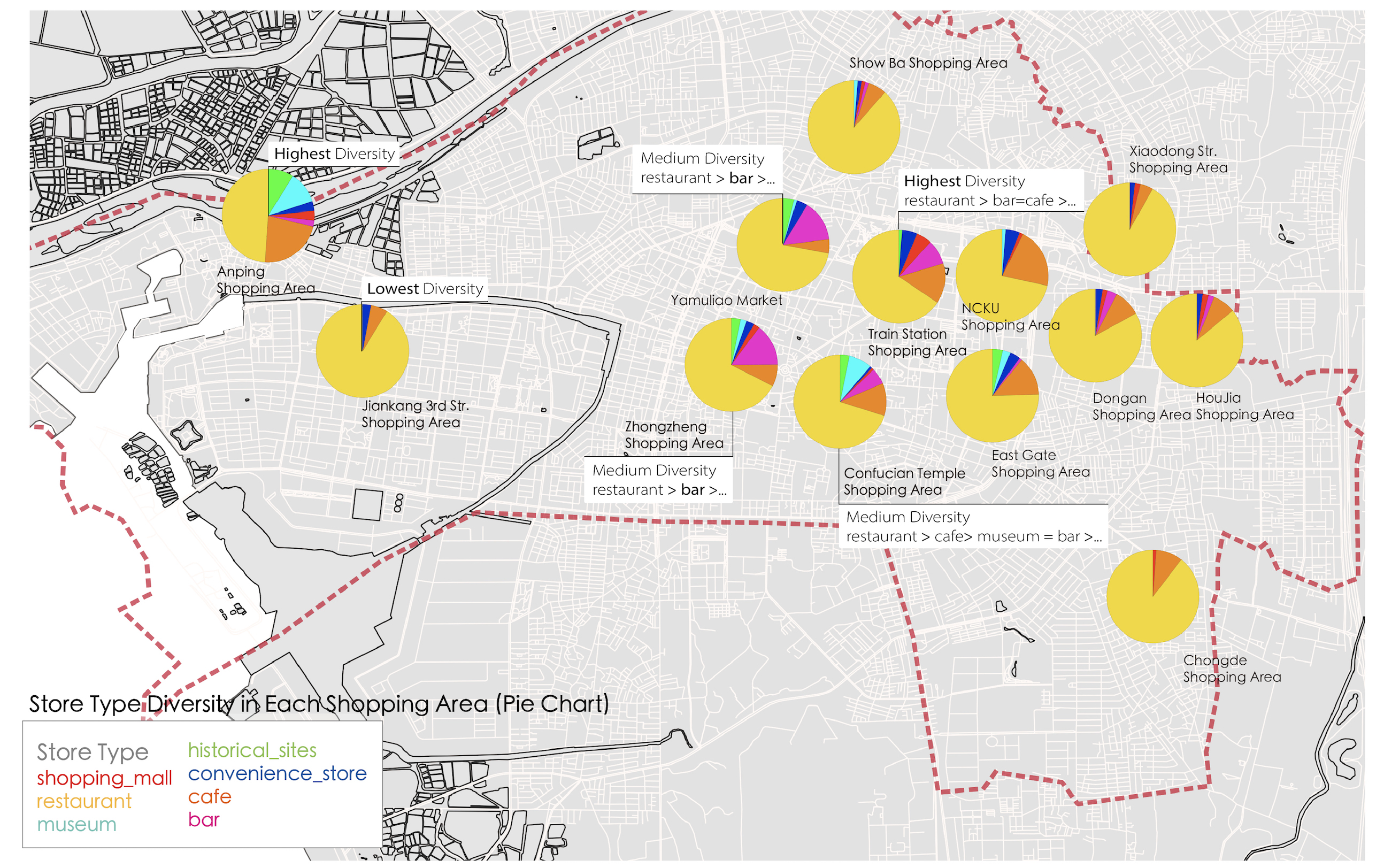
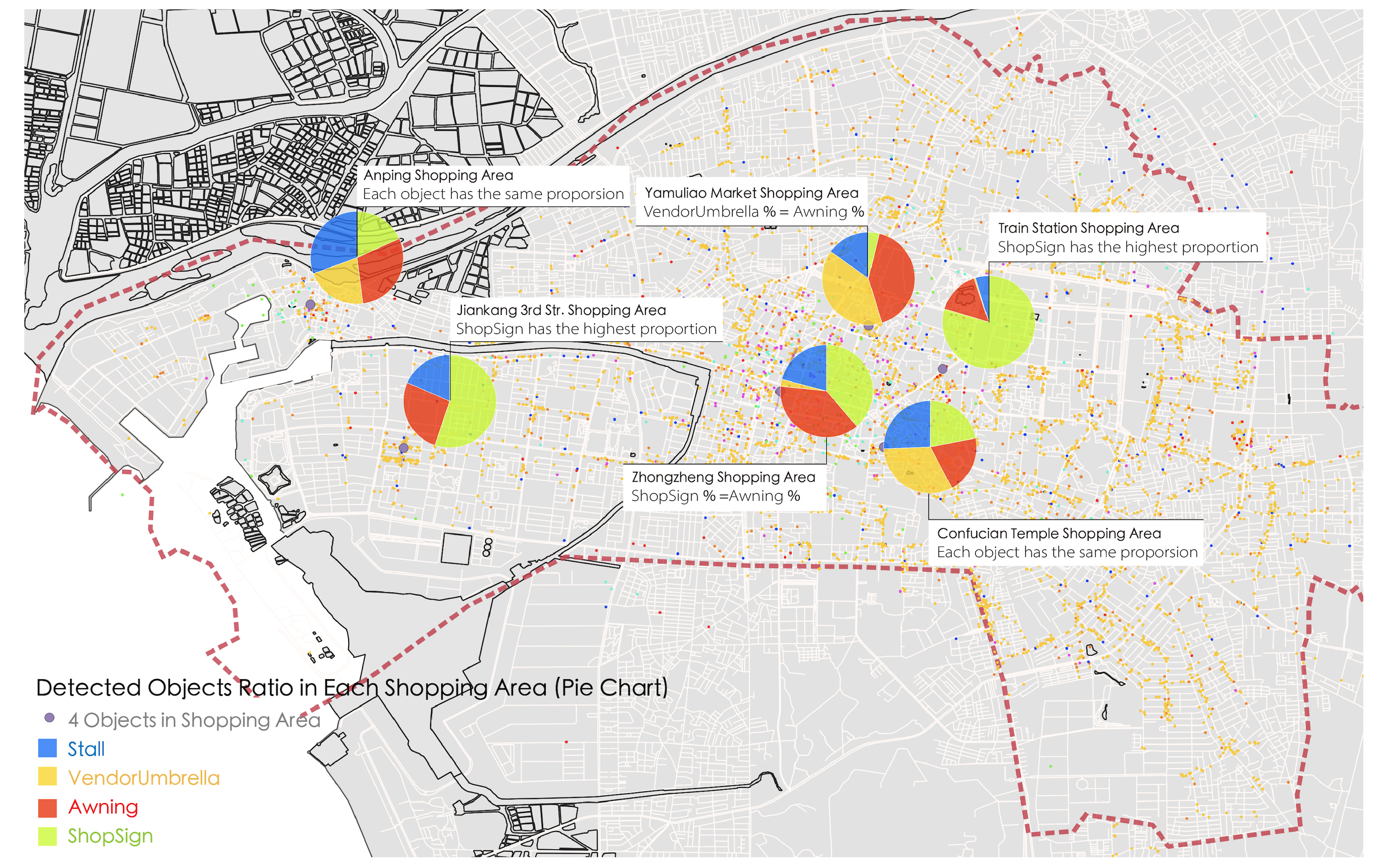
Continuing with the 6 shopping areas, I collected elevations of each area and used YoloV3, a real-time object detection algorithm, to detect 4 objects. The result is shown below.
- 4 objects: Stall, Vendor Umbrella, Awning, and Shop Sign

Part 1 conclusion: Store Type Correlation
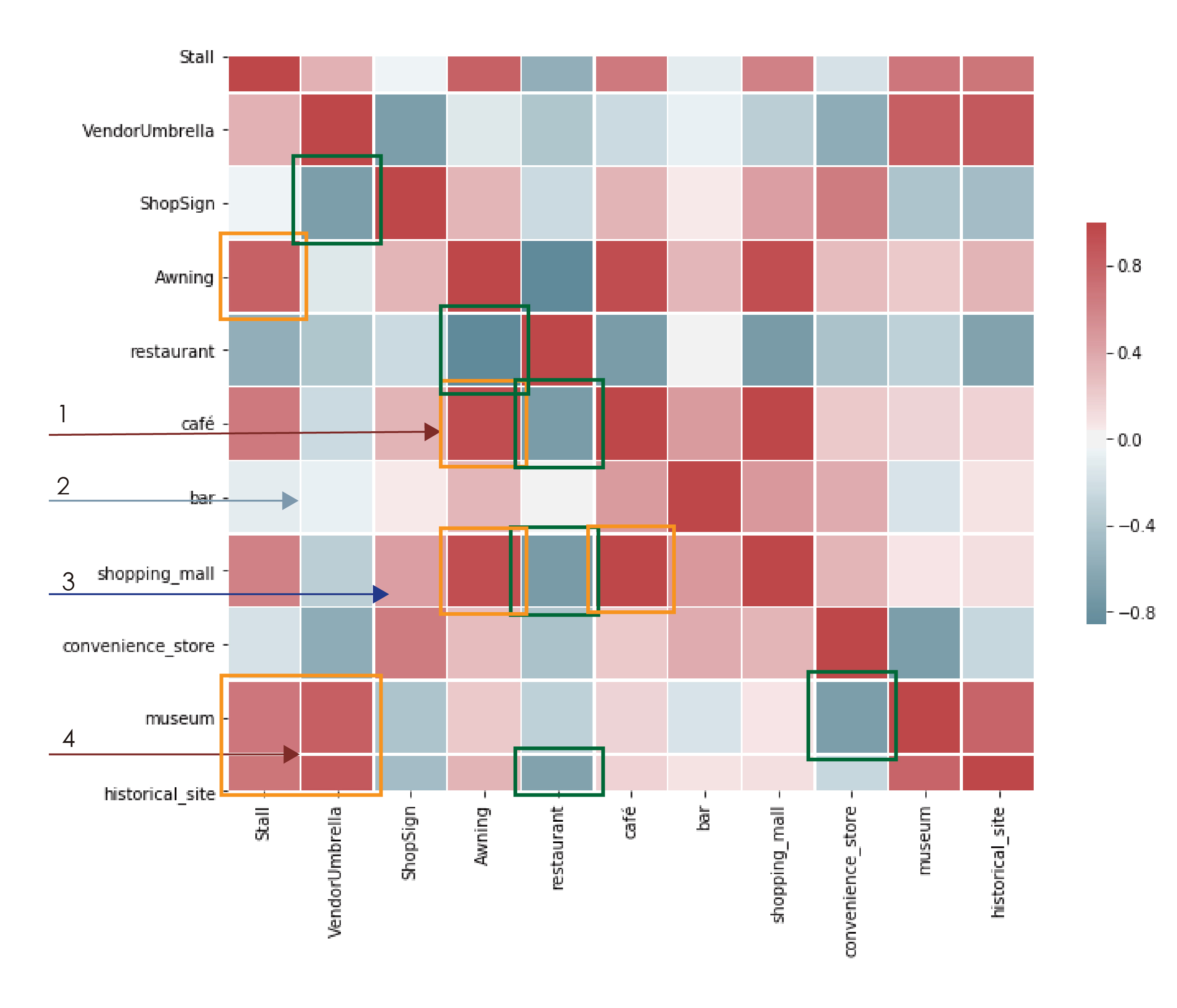
In part 1, I run a correlation analysis for 7 store types and 4 detected objects:
- Higher degree among Awning, Shopping_mall, and Cafe means that store types of shop and cafe and positively correlated with Awnings;
- Lower degrees between ShopSign and others, or bar and others elements;
- Restaurant is negatively correlated with Awning, Shopping_mall, and Cafe respectively. It may be related to different lengths of staying time depending on the goals of visitors;
- The cause of the relationship may be brought by tourists with higher mobility.
Part 2: Analysis of Transportation Data
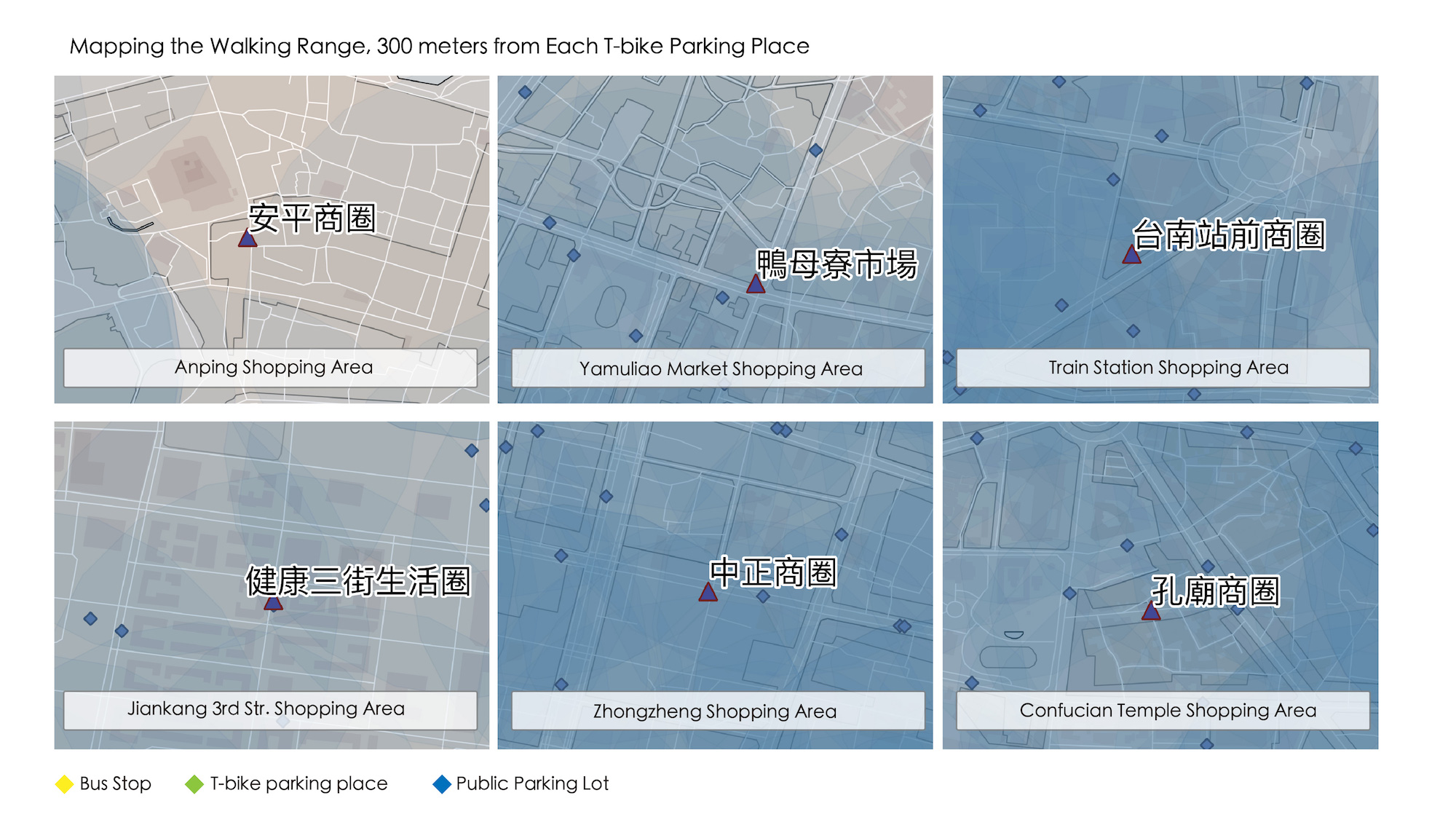
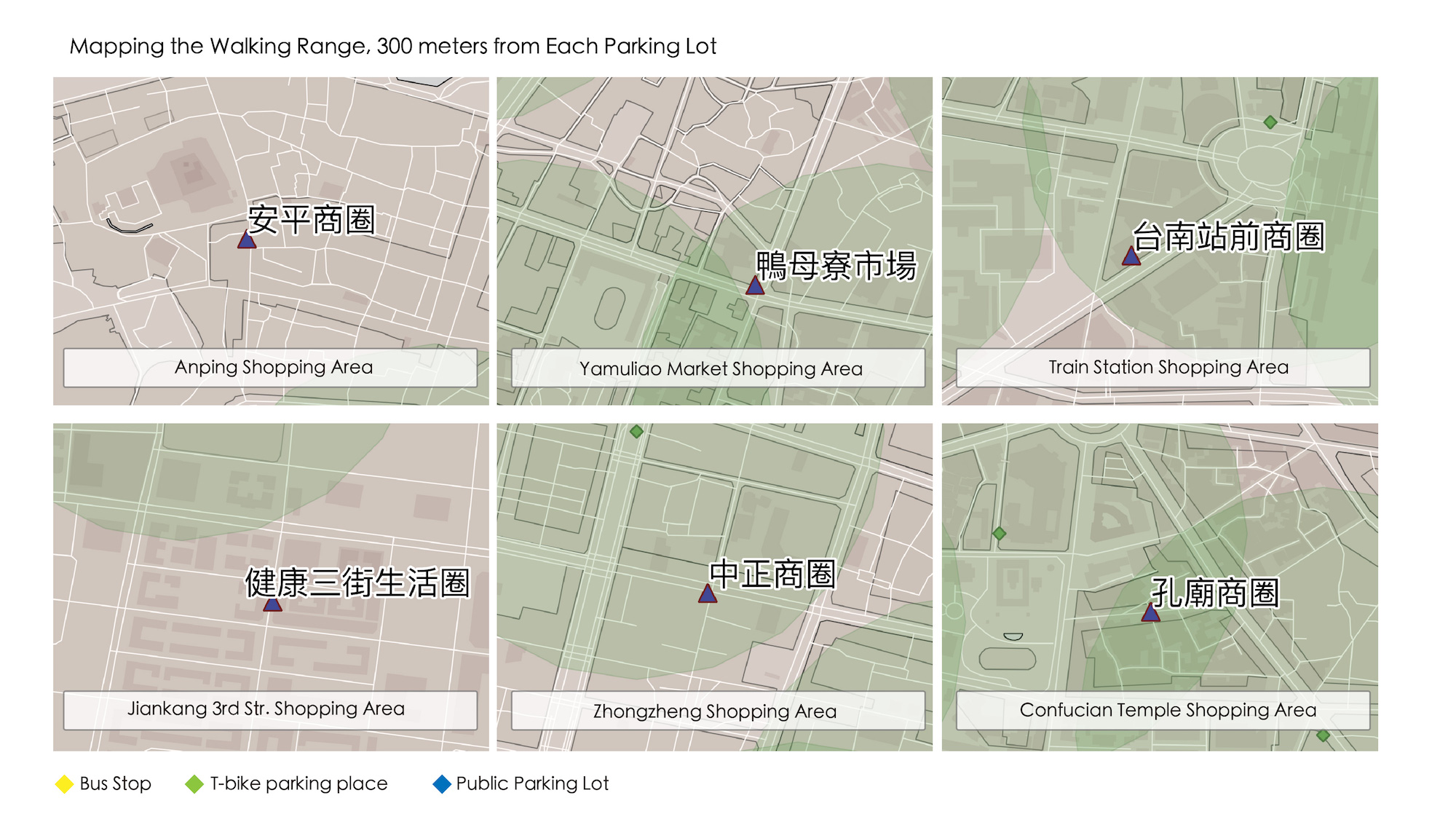
I mapped the walking range from the center of each transportation node, bus stop, t-bike stop, and parking lot, respectively. The deeper the color means that the easier people are willing to walk in.
- Assumption Walking Range: 5 minutes = range of radius 300 meters, which is a range for people to walk under a hot and wet day

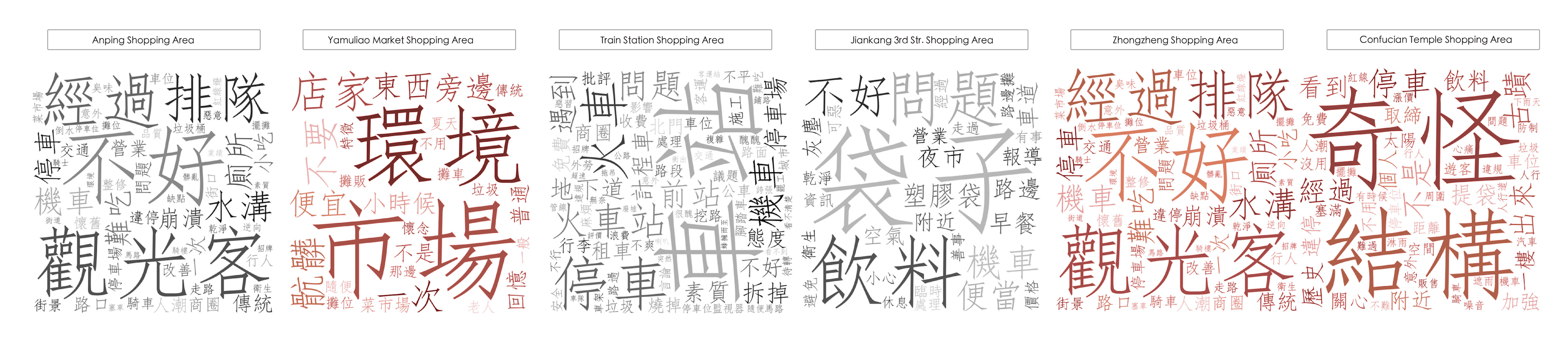
In addition, since transportation would have an impact on the environment, I analyzed the comments related to the 6 shopping areas from PTT, Taiwan’s most popular forum platform, and the road width of each area, dividing into Main Road, Street, and Alley, from wide to narrow.

The bigger the word means the more popular the related issue is. Plus, 3 shopping areas, the red ones, would be selected and applied to the future urban plans.
Conclusion
In conclusion, the analysis can categorize the prototype of the shopping areas into six types by high-to-low diversity shown below.

Future Urban Plan
The prototype provides a potential scientific way to improve the living environment for residents. It allows any designer to redesign the old shopping area efficiently without damaging the street fabric. As stated above, I applied the prototype to three shopping areas.
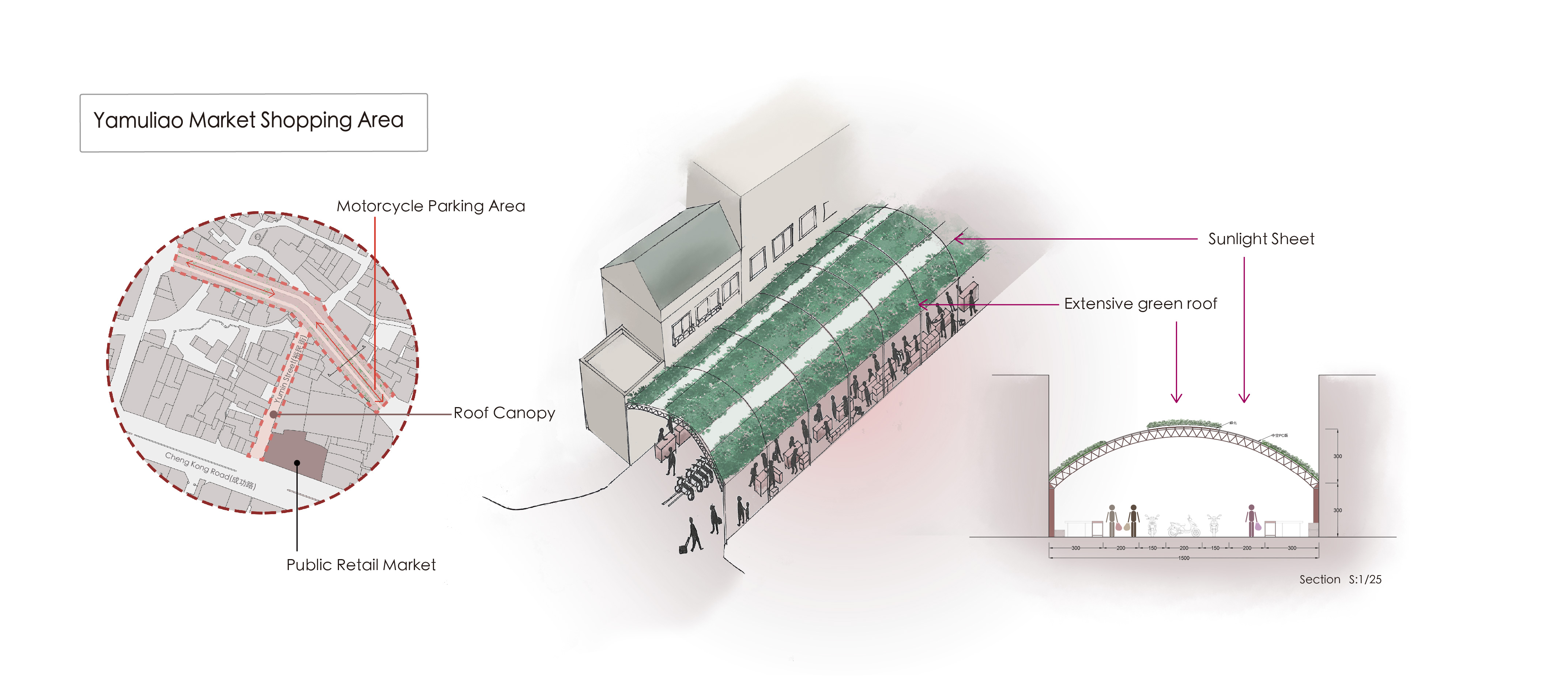
Yamuliao Market (鴨母寮市場)
Prototype: Traditional Market
Feature: Higher mobility, Higher foot flow, More Vendors, Narrower walking space
To follow the prototype, the first consideration should be people’s mobility. Since the walking space was not large, I combined and reorganized vendors with an extending green roof on the top to create a comfortable and clean market space.
Zhongzheng Shopping Area (中正商圈)
Prototype: Tourism
Feature: Higher diversity, Complex store types, Mainly for walk and public transportation
According to the prototype of tourism, the alley must be for walking and the road for public transportation. Then, I used pavement and flowerbeds to slow down the massive traffic and ease the tensions between pedestrians and motors, since the space should be focused on walkability for the public.

Confucian Temple Shopping Area (孔廟商圈)
Prototype: Attrations
Feature: Medium diversity, Mainly for cafe and historical site,  Higher foot flow, Simple street width
Referring to the prototype of attraction, the spot might be developed around a historical site and extended or started within the block in a simple way. As a result, I integrated the space for both visitors and the residents to lead people to flow into the streets around temples nearby and extend their activities in and out of the front yard of old houses.

 Tsai-Shiuan Weng